

Lifestyle Mistakes That May Be Aging You

Whether we like it or not, aging is something we can't avoid. Although we can invest in treatments and products that will keep us looking relatively young for as long as possible, there is no fountain of youth, and we can't slow down time. But what we can do, even before we make that first Botox appointment, is take a look at how we live and realize that as much as there are lifestyle habits that will help us live longer, there are also behaviors that are aging us quicker than we could have imagined.
When it comes to aging, there are two types: biological and chronological. "Chronological age measures the number of years someone has been alive," Francisco Lopez-Jimenez, MD, MS told Mayo Clinic in July 2024. "Biological age captures how a person is aging, according to many different factors and biomarkers." In other words, you may only be 40 based on the year you were born, but your lifestyle mistakes may have you looking and feeling 50.
Considering your genes only play a minimal role in how you age, adapting a healthy lifestyle is essential if you want to avoid speeding up your biological aging. While ultimately, we all end up in the same place, if you're someone who wants to slow down the hands of time, then you need to look at how you live your life. You may find that what you once thought was harmless behavior is actually doing some physiological damage.
Spending time in the sun without protection

The connection between sun damage and skin cancer is obvious. But even before things get that far, too much time in the sun will cause photoaging, which is what happens to your skin when it's exposed to too much ultraviolet (UV) radiation. While everyone will experience chronological skin aging, photoaging can be prevented by always using sunblock with an SPF of 30 or higher or, ideally, staying out of the sun all together.
"There is a gap in awareness about what causes the so-called 'signs of aging' on our skin," Deborah S. Sarnoff, MD, president of The Skin Cancer Foundation told Sun & Skin News in October 2023. "My patients are often surprised to hear that most of these signs are related to sun damage." According to a 2013 study published in Clinical, Cosmetic and Investigational Dermatology, when it comes to visible signs of aging, UV exposure can be blamed for contributing to a whopping 80% of it.
To make matters worse, because UV radiation literally changes the DNA of the cells it damages, you can't reverse the effects. While there are treatments — a guide to baby Botox, anyone? — to help reduces fine lines, wrinkles, and the brown spots that come from sun exposure, you can't technically erase what's been done. That's why, if you want to avoid looking 60 when you're only 40, load up on the sunblock or stay the heck out of the sun.
Not getting enough sleep
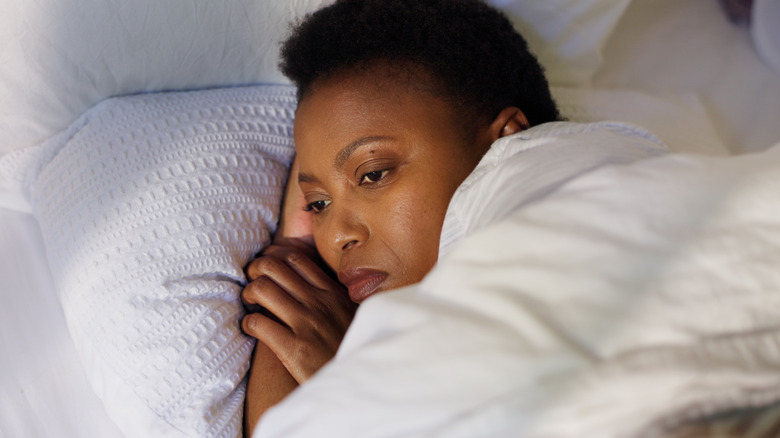
If you've ever had several sleepless nights in a row, then you know sleep deprivation can be debilitating. "Sleep is restorative," Virend Somers, MD, PhD, a cardiologist at Mayo Clinic, told Mayo Clinic Press in January 2024. "During sleep, your brain and body perform many critical tasks important for overall health." But not getting enough sleep can cause other issues too.
According to 2015 research published in the American Academy of Sleep Medicine, all it takes is one sleepless night to activate biological aging. If that weren't enough, a 2010 study published in BMJ found that sleep deprivation makes people look less healthy and not as attractive as those who do get a proper night of shut-eye, and a 2020 study published in Skin Research and Technology discovered a link between long-term lack of sleep and its impact on decreasing skin's hydration levels. Considering hydration is essential in creating a healthy skin barrier, it's easy to understand how a lack of it would negatively affect your face.
It's also worth noting that according to 2024 study published in QJM: An International Journal of Medicine, lack of sleep can take years off of your life. In other words, if you want to look good, feel good, and live a long healthy life, ensure your bedroom is primed for good sleep and get between seven and nine hours of it every night.
Eating too many processed foods

While we're all entitled to eat whatever we want, if you don't want to consume something that's going to age you, then put down the Twinkie and reach for a whole food instead. It's not that the Twinkie is necessarily bad, but the way it's made, in being ultra-processed, is the issue. This is most notably the case for people in the U.S. who eat what's called the standard American diet, in which the majority of your calories are coming from refined and processed foods.
According to a 2024 study published in Age and Ageing, ultra-processed food (UPF) speed up biological aging. This is because these items contain additives and sugars necessary to preserve the food. While that's all well and good for the shelf-life of the food, it leads to inflammation and oxidative stress — both of which put human cells through the wringer.
But as much as processed foods are biologically aging you, they're also physically taking a toll. Excessive and/or chronic inflammation from the food you eat can have its way with collagen and elastin, causing your face to be more prone to fine lines and sagging. While these things come for everyone in time, if you can stave them off by significantly scaling back on the processed foods and making an effort to eat more mindfully, in the long run, you won't just be feel better, but look better too.
Over-indulging in your vices

Although we all need to take a break and indulge in some unhealthy behavior sometimes, there's a huge difference between a couple of glasses of red wine at dinner once a week and getting trashed every night. Even if you think you're just a moderate or social drinker, it's amazing how much better you look — and feel — when you ditch the alcohol for even a month or two. "When your liver is functioning well, toxins that could potentially affect the skin are expelled naturally through your body," dermatologist Ariel Ostad, MD told Time in August 2014. "But if toxins build up in your liver, and aren't broken down properly, your skin can develop a variety of issues, like acne, sallowness, and wrinkles."
If your vice isn't drinking, but smoking cigarettes instead, then you can definitely expect to age yourself at lightning speed if you don't kick that habit. Smoking does an absolute number on the skin, from depriving it of necessary nutrients to destroying collagen and elastin, both of which give your skin that bouncy, youthful appearance. Smoking is also a quick and easy route to wrinkles around the mouth. "Smokers use certain muscles around their lips that cause them to have dynamic wrinkles that nonsmokers do not," dermatologist Jonette Keri, MD told WebMD in September 2025. Long-term cigarette use will also lead to severe dental and gum damage, making you look older than your chronological years.
Skimping on the exercise

If you ever needed a reason to finally start using your gym membership, here's a perfect one: your lack of movement is aging you. According to a 2016 study published in the Scandinavian Journal of Medicine and Science in Sports, your sedentary lifestyle is contributing to skeletal fragility. For those who have been sedentary for the majority of their life, their body could be decades older than its actual chronological age, which is terrifying to say the least.
When the natural aging process is interrupted with things like vulnerable bones and damaged cells, you'll not only feel it, but see it too. A 2022 study published in MDPI found that oxidative stress that comes with lack of regular movement directly leads to aging progression, cell damage, inflammation, and apoptosis, which is just a nice way of saying programmed cellular death. It also means tissue struggles to renew itself and in some cases you are left with zombie cells. These are cells that won't die, but also refuse to contribute to function of the body in a health way by distributing molecules that lead to inflammation and further degradation of tissue instead. Eventually, these zombie cells can take the credit for various diseases. Zombie cells can also be caused by UV radiation. Basically, get off the couch, grab the sunblock, and go for a walk.
Letting your stress levels get out of control

Although we live in a culture where being over-stressed seems to praised, it's just another thing that's going to age you. That's especially the case if you're chronically stressed and don't try to manage it. According to a 2020 study published in Biomedicines, stress is one of the leading accelerators of aging. In addition to causing inflammation, diabetes, hypertension, and a boatload of health issues, the increased cortisol, the stress hormone, wreaks havoc on the skin.
When there's a cortisol imbalance in the body from stress, the increased levels lead to less collagen and elastin production. When this happens, you don't simply look exhausted from your stress, but fine lines and wrinkles can follow far sooner than you — or your body — planned. Cortisol, as well as other stressed-related hormones, can also weaken the skin's barrier, making it difficult for the skin to repair its cells and retain the necessary moisture to avoid dry, ashy texture.
While trying to manage stress is certainly not an easy task, making little changes, like having daily floor time, the viral stress-relief practice, or engaging in a series of breathing techniques, can help. You won't be able to rid yourself of stress overnight, but making baby steps toward reducing it is essential. Especially if it means extending your life and allowing you to look good in the process.