

What Is Menopause Masking? What The Habit Is & Why It Isn't Serving You
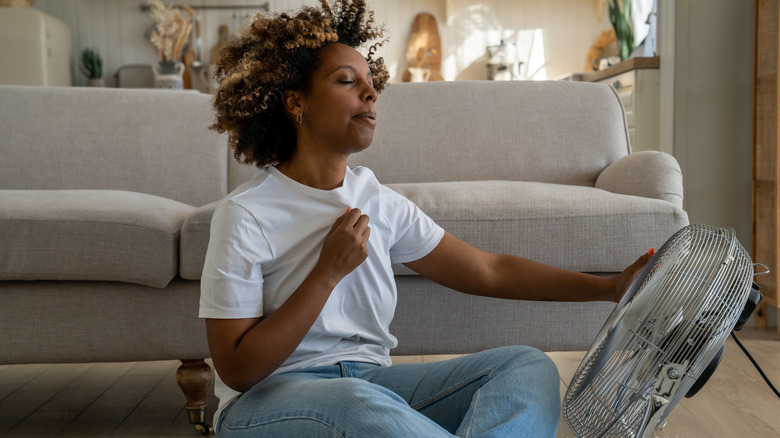
If you have ovaries, you will eventually go through menopause. Whether that menopause comes with getting older or is induced due to an illness and its following treatment, it's an inevitable part of life. Unfortunately, it doesn't get the attention it deserves, resulting in shame and stigma. If that weren't enough, it also leads to menopause masking.
"Menopause masking is when a woman quietly absorbs her symptoms and keeps performing as if nothing's happening," board-certified nurse practitioner, menopause certified specialist, Vanessa Coppola, DNP, FNP-BC, exclusively tells Glam. "She powers through the night sweats, the brain fog, the mood swings, the exhaustion, and she shows up to the meeting, the school pickup, the dinner party looking completely composed." As Dr. Coppola explains, no one knows how much the woman is struggling, as she puts on a smile and keeps going, sticking to her obligations and completing her responsibilities.
Although the term "menopause masking" is new, the behavior isn't. "Women have been doing this for generations," says Dr. Coppola, who is also the founder and CEO of Bare Aesthetic, Bare Soul Wellness, and Bare Innovation Lab. "We just finally have a name for it," she says. But the problem with masking is that it's not always just about hiding it from others. In some cases, women aren't willing to admit to themselves that some things are different — and we're talking about more than the skin changes that occur during menopause. Given this kind of denial, things can become problematic.
How menopause masking can be harmful

According to a 2019 study published in the Journal of Autism and Development Disorders, women are far better than men at masking autism spectrum disorders and ADHD, as well as other conditions, too. "Women mask their period pain, endometriosis pain, [and] they're told to suck it up and don't get the epidural during labor," gynecologist and menopause specialist, Sameena Rahman, MD, told Woman's World in January 2026, adding that she's seen this across all age groups, as there seems to be a belief that women should just endure their suffering. While women may be strong enough to tolerate many things, mentally and physically, that doesn't mean we should have to.
As Vanessa Coppola exclusively tells Glam, when you mask symptoms, you don't get the evaluations you need. "I was misdiagnosed for years in my 30s," she explained. At the time, Dr. Coppola was experiencing symptoms including heavy bleeding, fibroids, anxiety, and cardiac arrhythmia that needed an ablation. Because most women in the U.S. don't start having symptoms related to perimenopause until their 40s — with the average age of menopause being around 51 to 52 — Coppola's doctors treated each medical issue separately. "Nobody connected them to the hormonal shift underneath ... masking buys you a longer road and more damage along the way," she commented.
In other words, masking can make things worse. It doesn't matter if you're hiding things from others or from yourself, because sometimes a hot flash isn't just a hot flash, but only testing can prove otherwise. "You're not pausing the process by ignoring it," Dr. Coppola comments.
Instead of menopause masking, talk to your doctor about treatment
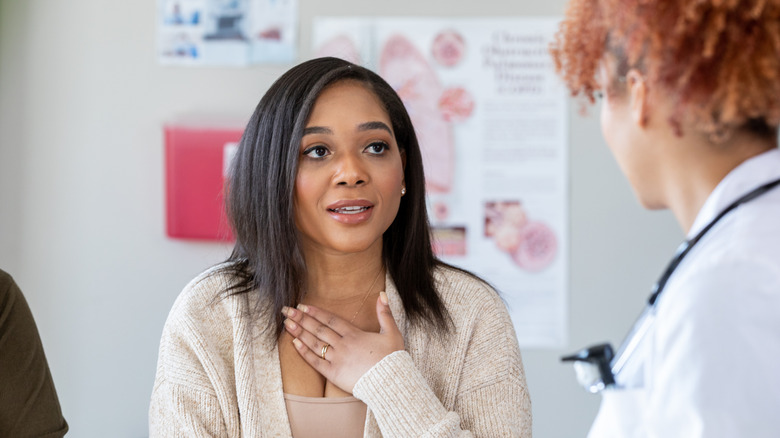
When it comes to alleviating menopause symptoms, we're lucky enough to live in a time when treatments are available. "Estrogen therapy changed everything for me, and it's appropriate and safe for far more women than the old fear-based messaging led us to believe," Vanessa Coppola tells Glam. While estrogen did the trick for the expert, for others, progesterone might be a better fit, but that's something you'll only know once you have your hormones measured by a medical health professional. "Beyond hormones, there are options for sleep, mood, bone health, heart health, the metabolic changes, the skin and collagen changes," says Dr. Coppola. "When you mask, you walk past all of it."
Similar to Dr. Coppola, Naomi Watts also started to experience menopause symptoms in her 30s. When she finally got a diagnosis, Watts turned her menopause confusion into resources for all women. While we're not suggesting you write a book and launch a beauty brand specifically for menopausal women like Watts did, if you can at least avoid menopause masking, you'll be heading in the right direction to get the help you need, whether that be physical, hormonal, or mental assistance, as hormones can really do a number on the body.
"Menopause isn't aging, it's remodeling," says Dr. Coppola. "Your body is reorganizing itself, and you deserve to go through that with a clinician who actually sees the whole picture." There's no strength in masking; there's strength in speaking up, advocating for yourself, and making sure you are heard.