

Why Hilarie Burton Thinks It's So Vital For Women To Speak About The Not-So-Pretty Parts Of Their Bodies
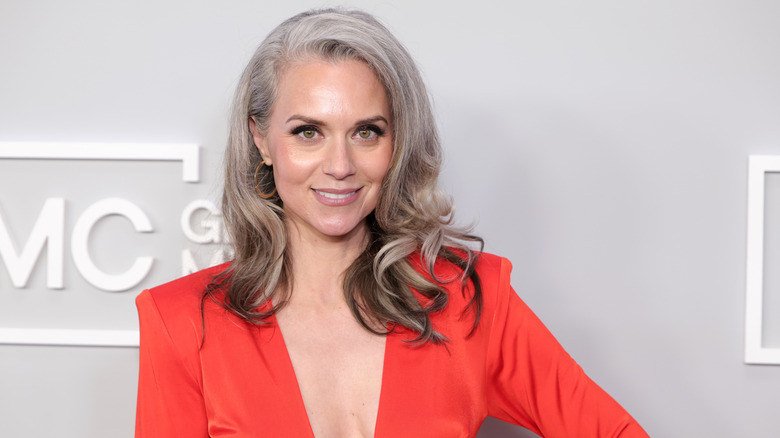
For years, conversations surrounding women's bodies focused solely on meeting beauty standards and achieving perfection. But for Hilarie Burton, it's just as important to talk openly about the parts of our bodies that don't fit into those polished narratives. After her own struggles with her menstrual cycle and perimenopause, the actor realized that embracing honesty about physical changes can help women feel more empowered in their own skin.
Burton recalled never having a regular menstrual cycle until she began using birth control, which only did more harm than good. "I didn't have a real cycle until I was put on birth control. Then, I was on birth control for so many years, and I was not on the correct birth control. It made me nutty, so they put me on Xanax," she said in a TikTok video for her podcast "Drama Queens." Her body went through further changes as her pain shifted from her menstrual cycle to her ovulation cycle, and shortly after experiencing more changes, Burton was dismissed as too young for perimenopause. After doing her own research, she found a doctor who confirmed that she was indeed beginning menopause. But rather than running from it, the Hallmark actor, who proved that transitioning to gray hair doesn't have to be boring, welcomed the journey with open arms. "I get to own it. Now I get to treat it, and I get to help other women navigate it," she told Brit + Co.
Hilarie Burton is continuing the conversation with her children
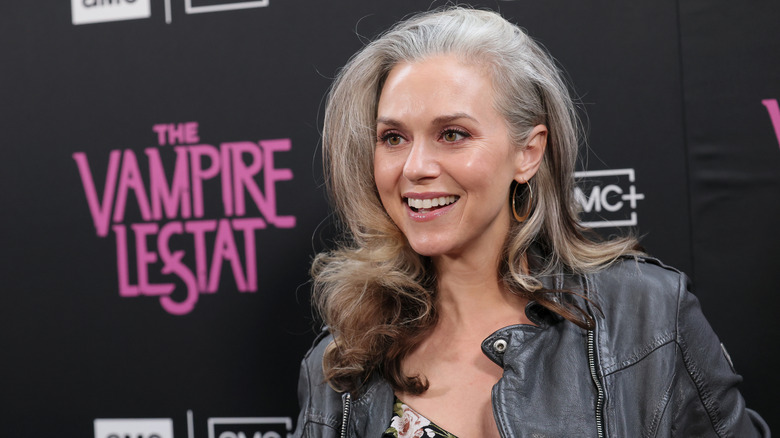
Not only did Hilarie Burton help broaden the conversation regarding what to know about perimenopause with other women, but she's also leading the charge at home with both her daughter and son. The "One Tree Hill" actor told People about a time when her son, Gus, was panicking about a situation, and she told him, "This is your body having a chemical reaction that is making it feel bigger than it is, the same way mom sometimes freaks out because my body's having a chemical reaction." She had the same conversations about periods and puberty with her son that she had with her daughter because Burton believes women shouldn't be the only ones educated about the realities of their bodies.
Instead, she hopes raising an informed son will help create a greater understanding of experiences like menstruation and menopause for future generations. "I think if we are wanting to 'fight the man,' we have to start when they're little, and we have to expose our kids to subject matter that used to be taboo — that is actually just basic human functions," she said. By encouraging open dialogue at home and in public, Burton is helping normalize experiences that millions of women face, proving that the more these realities are discussed, the less isolating they become.