

Marilyn Monroe Wanted Kids But Her Conception Journey Ended In Heartbreak
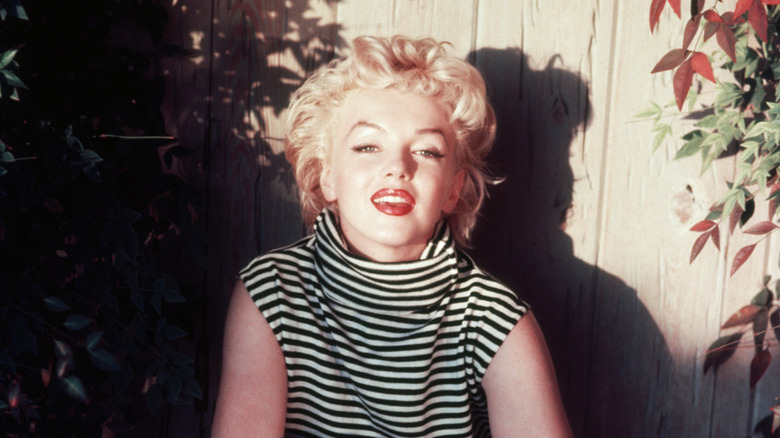
From the outside, Marilyn Monroe had it all. Considered one of the most beautiful women in the world, with the talent and comedic timing to go with it, Monroe rose to international fame, solidifying herself as a pop culture icon. But behind closed doors, it was another story. Not only did Monroe have depression and anxiety, but she also had three failed marriages and a desire to have children that never came to fruition.
During her marriage to her third husband, playwright Arthur Miller, Monroe got pregnant three times, in 1956, 1957, and 1958. All three pregnancies ended in a miscarriage, with the second pregnancy being an ectopic one — the fertilized egg was outside the uterus, meaning it didn't have a chance at survival. It's believed the reason for the miscarriages was that Monroe had endometriosis. "The condition was so severe that it destroyed her marriages, her wish for children, her career, and ultimately her life," Anthony Summers wrote in his 1985 book, "Goddess: The Secret Lives of Marilyn Monroe," via People. Without access to surgical treatment at the time, Monroe became dependent on painkillers to ease her physical suffering, adding to the complications in her life.
If only Monroe had been born a little later, the signs of her fertility problems could have been addressed and managed. Not only could Monroe have avoided so much physical and emotional anguish, she maybe could have had the happy ending she deserved. But, sadly, even today, endometriosis goes undiagnosed for far too long for some women.
If you or anyone you know needs help with addiction issues, help is available. Visit the Substance Abuse and Mental Health Services Administration website or contact SAMHSA's National Helpline at 1-800-662-HELP (4357).
What is endometriosis?
According to the Mayo Clinic, endometriosis is when the lining of the uterus grows outside the uterus instead, affecting the surrounding reproductive organs like the pelvis, ovaries, and fallopian tubes. Those with endometriosis experience pain during sex, menstruation, and whenever they go to the bathroom. Excessive bleeding, nausea, physical exhaustion, and bloating can also be symptoms. In other words, it's a constant physical pain that takes its toll, especially when you don't know what's happening to your body.
Contrary to what you may have been taught, endometriosis is not rare among women, but rather quite common: 2 to 10% of women between 25 and 40 deal with varying degrees of it. Despite this, it still doesn't get the attention it deserves. In fact, both male pattern baldness and erectile dysfunction receive more funding for research than endometriosis, and, similar to menopause, medical professionals don't get the education they need to properly diagnose and treat their patients.
"Many doctors still lack proper training in diagnosing and treating the disease," Dr. Allyson Shrikhande, the Chief Medical Officer of Pelvic Rehabilitation Medicine, told The Pelvic People in 2025. "The slow progress in finding better treatments and understanding [endometriosis'] causes reflects a gender bias in medical research, where women's health issues receive less attention and funding." This explains why Marilyn Monroe's diagnosis marked her life. While she knew she had a serious menstrual condition, doctors in her time didn't really know how to control it or even recognize it. Even in the present, some celebs with great insurance and access to modern health care, like Lena Dunham and Padma Lakshmi, lived with undiagnosed endometriosis for many years.
How things could have gone differently for Marilyn Monroe today
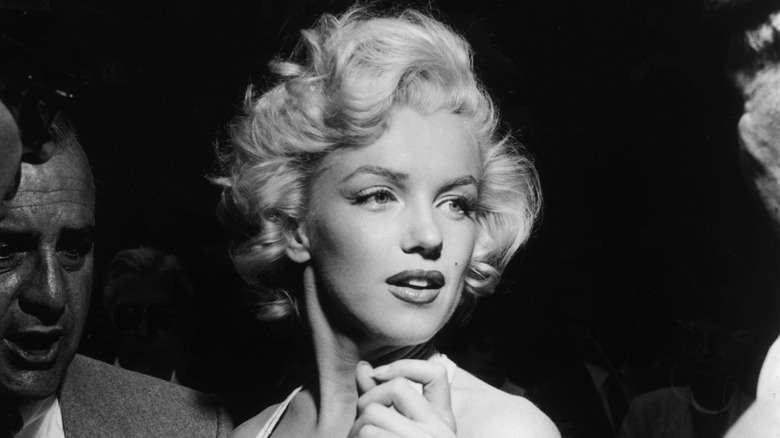
Marilyn Monroe knew she had endometriosis, and, being aware of how debilitating it was for her when she was menstruating, she had it written into her contracts that she wouldn't work those days. There's nothing controversial about taking a period leave, especially if it won't let you do your normal activities. But, to prove just how misunderstood it was at the time, in 1953, after researching the disease, obstetrician and gynecologist, Dr. Joseph Vincent Meigs wrote, "It is the author's belief that avoidance of endometriosis through early marriage and frequent childbearing is the most important method of prophylaxis." Sexist much?
Despite the miscarriages, Monroe wouldn't give up hope on motherhood. After her second miscarriage, she asked a friend, the poet Norman Rosten, if she should try again. "Should I do my next picture or stay at home and try to have a baby again? That's what I want most of all, the baby, I guess. But maybe God is trying to tell me something ... with all the pregnancy problems," she shared (via USA Today Entertainment).
While there is treatment for endometriosis today, like a laparoscopic excision surgery,, this wasn't the case during Monroe's lifetime. In fact, because her endometriosis was so bad, Amy Green, Monroe's stylist and friend, said the doctor suggested a hysterectomy, but Monroe refused. "Marilyn was emphatic," Green commented (via People). "She said, 'I can't do that. I want to have a child. I'm going to have a son.'" Tragically, Monroe passed away in 1962 at the age of 36, never seeing her dreams of motherhood become a reality.