

Gray Hair Myths That Aren't Worth Believing
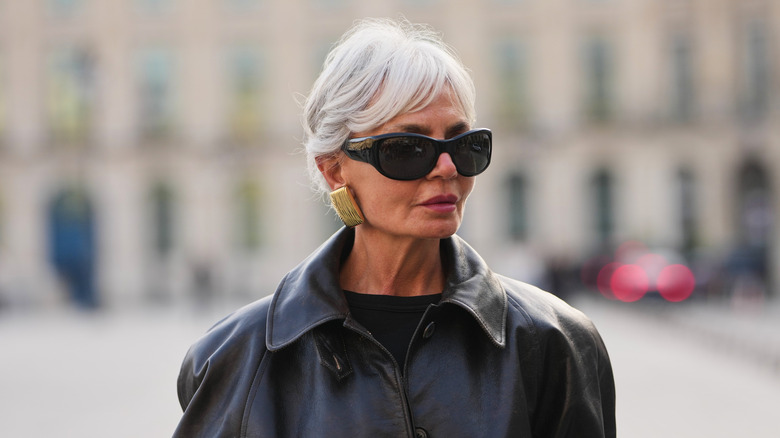
Beauty ideals have reinforced the narrative that going gray means women are either old or undesirable. The beauty industry has created a stir about silver hair, and while women continue to cover their roots with dye, the hair-coloring industry has a value of $15.47 billion in 2026, per Business Research Insights. For years, myths about gray hair have been passed down through generations, and these tales have only perpetuated the stigma. From the idea that plucking silver strands will lead to several growing back at once, to the belief that redheads are somehow immune to graying hair, the world has been compelled by these myths, most of which have little to no scientific basis.
While there may be some gray hair trends that are firmly outdated in 2026, going gray is certainly nothing to fear. To address some of the myths about gray hair that aren't worth believing, we've enlisted the help of Penny James, a certified trichologist and the founder of Penny James Trichology Center, a specialist hair and scalp clinic that offers effective hair loss treatments. With her unique insight into the hair world, James is clearing up some of the most persistent falsehoods about going gray, separating fact from fiction to calm the noise surrounding this natural transition.
It's not true that if you pull out a gray hair, two gray hairs will grow back
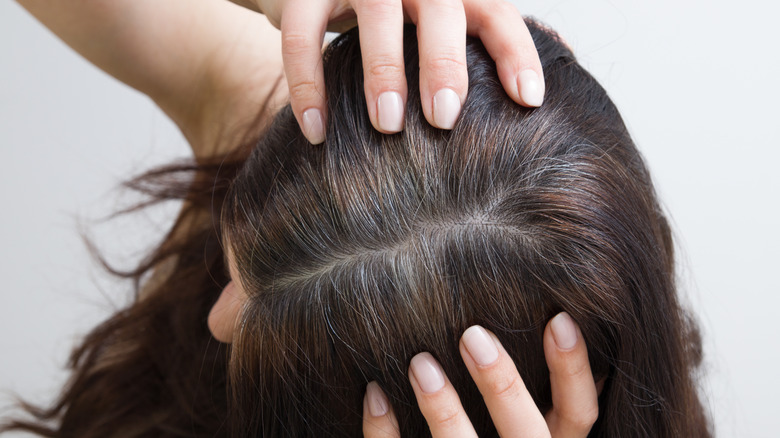
One of the oldest hair myths of all time is that if you pull out a single gray hair, plucking will cause the number to multiply and two will grow back. According to Penny James, this belief is completely false. In truth, gray hair isn't contagious and plucking gray strands will not result in waking up with a head of silver hair. Those who have fallen for this fallacy might have simply noticed additional strands that were already there after they spotted and removed the first gray.
"The hair that is now gray has lost its melanin, which is the natural hair pigment; these melanocytes live above the hair bulb, deep in the dermis," James tells Glam exclusively. In other words, each hair has its own individual melanin profile, so removing one hair will not impact any surrounding follicles. There is also a reason why gray hairs may feel thicker than other pigmented hairs, and it's not because they've grown tougher with old age. "The hair may often feel coarse and wiry in texture. This is because the loss of melanin changes the structure of the hair shaft," James adds.
It's important to remember that while plucking gray hairs won't make multiple hairs grow back in its place, removing your silver strands also won't help you stop the natural aging process.
Gray hair isn't exclusive to older people

Another common misconception about aging hair is that gray hair only comes in when you are older. There are several hair myths you need to stop believing, particularly when it comes to developing your first gray hairs. The fact is, people develop gray hair at all different ages, with most discovering a significant number of gray hairs in their 30s and 40s. Health issues and vitamin deficiencies can also impact the development of gray hair. "If you are deficient in vitamin B12, the natural pigment can be affected, causing patches to become gray," Penny James reveals in our exclusive chat.
Fluctuating stress can severely and acutely impact the scalp. In some cases, heightened stress levels can lead to minor hair loss, or in more extreme cases, alopecia areata, where the hair follicles are attacked by the immune system, or telogen effluvium, which causes an increase in hair fall. However, James notes that stress can also promote the premature development of gray hair. "If you had a sudden shock or have chronic, overtaxing stress, this can lead to the release of chemicals (like norepinephrine) that accelerate the depletion of pigment-producing cells in your natural hair color, resulting in no pigment at all," she explains.
The scalp expert went on to note that silver strands can actually regain their natural pigment, when stress levels return to normal. "With these two conditions, the gray may revert to melanin production once your stress is under control and nutrient levels are in balance," James concludes.
Coloring gray hairs won't turn the rest of your hair gray faster
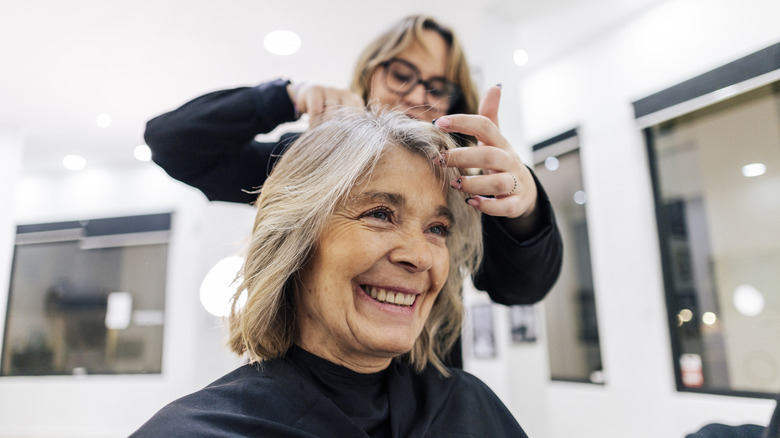
Another myth that Penny James helped us uncover is that coloring your gray hair makes the rest of your hair turn gray faster. Surprise, surprise: This also isn't true. James explains that it is impossible for hair dye to reach hair follicles below the scalp.
"Not true — hair color dye does not influence natural hair pigment," she shares exclusively with Glam. "Hair dye only affects the hair shaft that is on your scalp; the hair dye does not penetrate into the dermis and alter the melanocytes in the bulb region where our natural hair color comes from."
In other words, hair dye can't reach the cells that produce your natural hair pigment. Yes, the dye changes the color of your hair, but it can't affect the way future hair grows or how quickly it loses its pigment. For those who regularly cover their gray hair with hair dye, this myth can seem believable. As newly dyed hair grows out, the stark contrast between the fresh color and growing gray roots can make it seem like you are rapidly developing gray roots. However, it's just an illusion and your hair is continuing with its natural hair cycle. While at-home hair dyes, which often lead to many avoidable mistakes, may have boomed in the beauty industry, this myth gives the products too much credit. These permanent dyes aren't as powerful as we think.
Going gray isn't the end of your attractive years
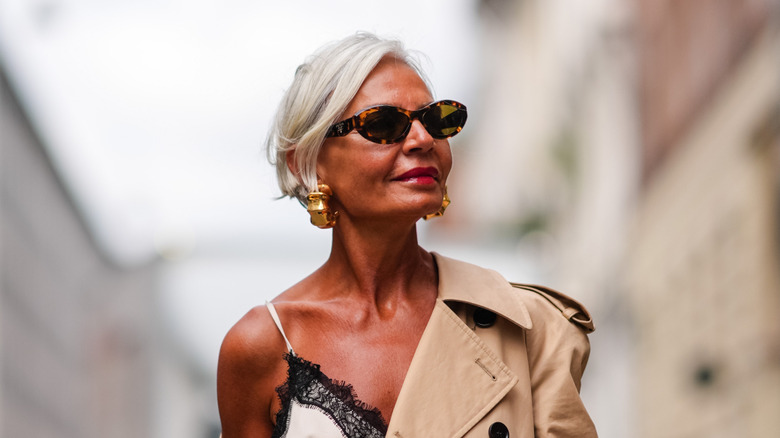
Some people believe that going gray is the end of an era. But truthfully, this could be the biggest myth of all. Going gray is just the beginning. In recent years, social media has helped spark a gray hair revolution. The empowering movement has been defined on Instagram by the trending hashtags #SilverSisters and #GrayHairDon'tCare. Additionally, the Instagram account Grumble invites submissions of gray hair to be publicly celebrated. The account serves as a platform for women to share the truth about going gray and the growing community proves going gray often provides women with a newfound confidence.
Under smiling selfies showing off their gray hair posted to the account, women encourage others to embrace their silver locks, sharing how going gray has improved their self-esteem. "It was definitely worth it," one woman wrote in a caption on Grombe's post. "I am so happy I made the decision as I love my silver and being comfortable in my own skin."
Other women have used the platform to share their experiences while addressing the stigma attached to gray hair. "I'm feeling comfortable and empowered as I let go of the need to try to look a certain way, and instead, accept my changing as a reflection of my growing wisdom," another person wrote. "I'm loving these silver strands." Their brave accounts highlight how going gray is really a new beginning, and not the end at all.
Redheads aren't immune to the graying process

From witch hunts to freckles, there are many myths about redheads, which have the rarest natural hair color worldwide and make up fewer than 2% of the population, per Medicover Genetics. Red hair is caused by the MC1R recessive gene, which means it often skips generations and each parent must carry the gene, even if they're not redheads themselves, for just a 25% chance of having a child with red hair. So though they're frequently studied, it's easy to see how these myths persist.
One major misconception that merges red and silver hair is that redheads are immune to developing gray hair. While redheads might keep their natural hair pigment for longer than average, they don't automatically avoid the natural graying process. The truth is all hair types can lose pigment. But unlike darker hair colors, which tend to go gray directly, red hair generally goes through a fading process, turning copper or strawberry blond first, and eventually fading to a blond-gray or silvery white.
While it's not completely clear why red hair grays in this way, it may have something to do with the fact that red hair carries less eumelanin and more pheomelanin, which gives the color its lighter, warmer glow. A 2017 study published in Photochemistry and Photobiology found that pheomelanin degrades in a different way from eumelanin, which may impact the way in which the hair presents when it loses pigment.