

Quote Of The Day By Charlotte Brontë: 'I Have For The First Time Found What I Can Truly Love...'
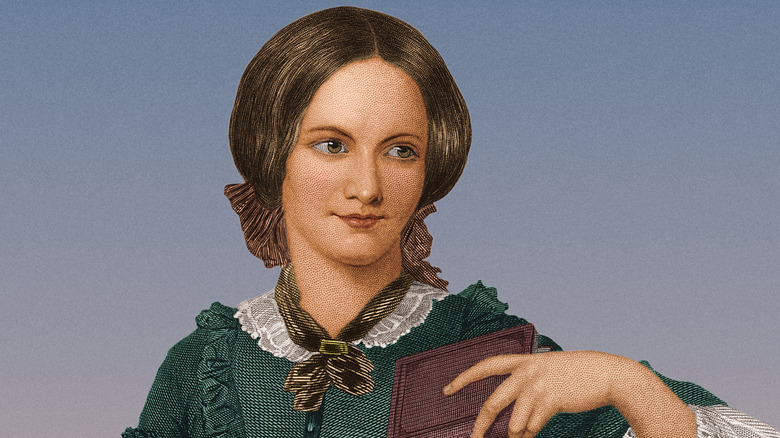
To readers of Victorian novels and students of English literature, the name Charlotte Brontë is still held in high regard more than 170 years after her lifetime. Born in Yorkshire, England, in April 1816, Charlotte is best known for the 1847 classic "Jane Eyre," though she published a few other works, including "Shirley" in '49, "Villette" in '53, and "The Professor" two years after she died in 1857.
The daughter of an Irish clergyman, Charlotte was one of six children, but took on a motherly role in her household when her own mother and two older sisters died around 1820. Her remaining sisters, Emily and Anne, as well as her brother Branwell, all had an aptitude for art in some way. Being male in the 19th century, Branwell was encouraged to pursue his painting and writing abilities, but Charlotte rose to fame when "Jane Eyre" won over readers at the time. Along with providing commentary on social classes and the role of women within those boundaries, the novel features a strong romantic arc that readers still resonate with today, and one that Charlotte was well-placed to write.
She rejected three marriage proposals during her life, and her published letters show that she was all too familiar with unrequited love. She finally married Arthur Bell Nicholls in 1854, who had been an admirer for a long time. But she died while pregnant the following March at the age of 38. This was officially attributed to tuberculosis but has since been theorized to have been the result of pregnancy complications. In Charlotte's short life, she experienced firsthand the ups and downs of love and wrote some of the most thought-provoking lines about the subject in her novels, making her the perfect person for our Quote of the Day.
Quote of the Day by Charlotte Brontë
Published in 1847, Charlotte Brontë's "Jane Eyre" follows the character with the same name, who finds work at Thornfield Hall, the estate of the wealthy Edward Rochester. Of course, the two fall deeply in love, but just as they're about to get married, Jane learns that Edward has a secret: He's already married to Bertha Mason, who has been locked away out of sight due to her mental illness and violent tendencies. This sets the scene for Edward to confess his true feelings for Jane in Chapter 27, hoping he can still hold on to her despite his lies: "I have for the first time found what I can truly love — I have found you. You are my sympathy — my better self — my good angel."
Jane loves Edward deeply, mirroring his feelings, but the vulnerability he shows in this scene isn't enough to make up for his deception, and she eventually leaves the estate. The two do eventually come back together, but not before Edward goes through a dramatic redemption arc. At this midway point of the story, Edward's line is not quite enough, even if it's a good summary of true love.
Deeper meaning of Charlotte Brontë's quote — Summing up the elements of true love
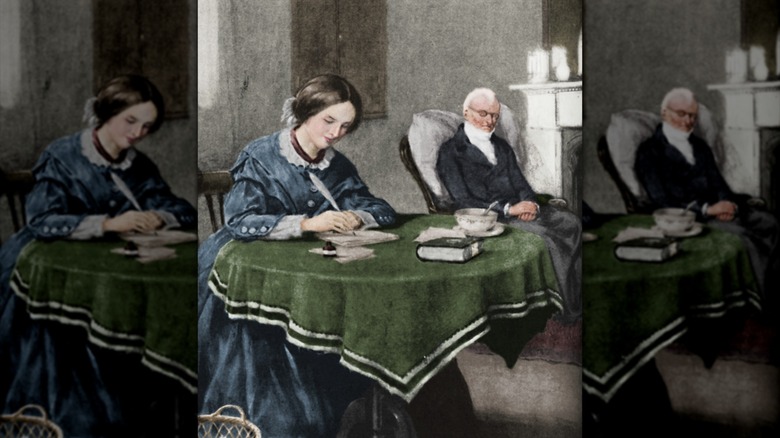
In "Jane Eyre," Edward Rochester, written by Charlotte Brontë, declares his love for Jane by explaining exactly how she makes him feel. Though short, this quote captures what being so deeply in love feels like. He likens Jane to "sympathy," highlighting the compassion, understanding, and patience that lovers offer one another. While in a modern sense we tend to prioritize empathy and understanding one another more so than sympathy, Brontë may have been exploring the idea of tolerance and kindness in love.
Then Edward talks about Jane being his "better self," which may point to the notion that love brings out the best in us. Brontë captured the idea that when we're truly in love, we tend to be our best selves around that person. On a deeper level, this could also unpack the concept of soulmates, and how we see ourselves reflected in our other halves, but with extra traits that we love and aspire to. Now, Brontë made sure that her protagonist, Jane, did not take to the idea of being anybody's "angel," but with this phrasing, Edward was likely simply expressing how falling in love can bring so much happiness that it genuinely feels like it's come from a higher power.
Edward says these things to Jane and allows himself to be vulnerable because this bold move is the only thing that might stop Jane from leaving when she hears about his hidden marriage. It's the perfect place in a romantic story for a character to put into words what the experience of love truly feels like, and Brontë nailed it.
More quotes from Charlotte Brontë
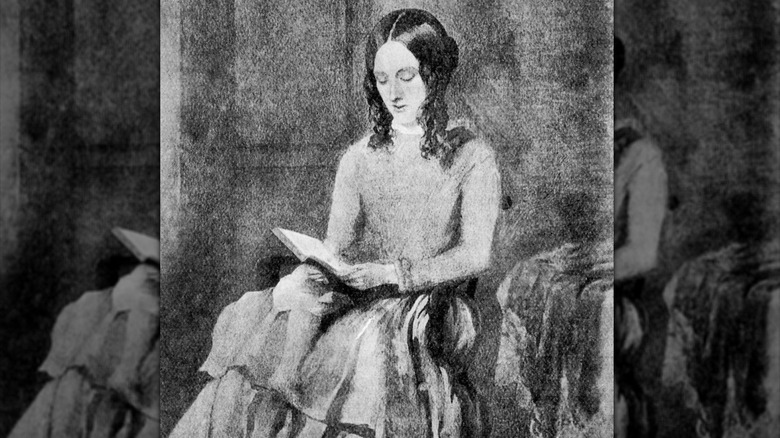
- "I am not an angel,' I asserted; 'and I will not be one till I die: I will be myself. Mr. Rochester, you must neither expect nor exact anything celestial of me — for you will not get it, any more than I shall get it of you: which I do not at all anticipate."
- "I am no bird; and no net ensnares me: I am a free human being with an independent will."
- "There is no happiness like that of being loved by your fellow creatures, and feeling that your presence is an addition to their comfort."
- "Peril, loneliness, an uncertain future, are not oppressive evils, so long as the frame is healthy and the faculties are employed; so long, especially, as Liberty lends us her wings, and Hope guides us by her star."
- "One suffers in silence so long as one has the strength and when that strength fails one speaks without measuring one's words much."
- "Life is so constructed, that the event does not, cannot, will not, match the expectation."
- "I believe in some blending of hope and sunshine sweetening the worst lots. I believe that this life is not all; neither the beginning nor the end. I believe while I tremble; I trust while I weep."
- "Reader, I married him."