

Hairstyles And Cuts From The '20s That Have Regained Popularity With A Modern Twist
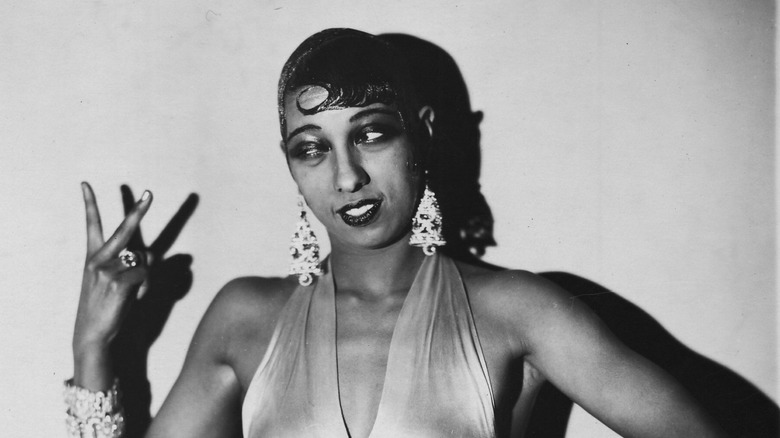
By introducing a range of revolutionary hairstyles and sleek silhouettes that challenged the era's societal norms, the 1920s marked a turning point in women's style that's still being referenced and recreated a century later. Of course, a lot of this started with the flappers, who emerged amid the glitz and glamour of the Roaring Twenties. Flappers were a generation of young women who opposed traditional values by, in part, embracing shorter hems and hairstyles.
Now, it's no secret that some old-school beauty trends have surged in popularity again. From blunt bobs, ultra-short pixie cuts, and shaggy looks to finger curls, voluminous 'dos, and artistic kiss curls, the era's iconic hairstyles have made their way back into the spotlight. The big difference? Modern versions often differ in length, texture, and finish, and many celebrities have also been merging these styles with contemporary trends to give these vintage looks new life. Basically, it's not just the 1920s' fashion trends that are making a comeback; the decade's hair looks are, too, and you're going to want to get in on them with the following modern adjustments.
Even without the Eton crop, kiss curls have prevailed
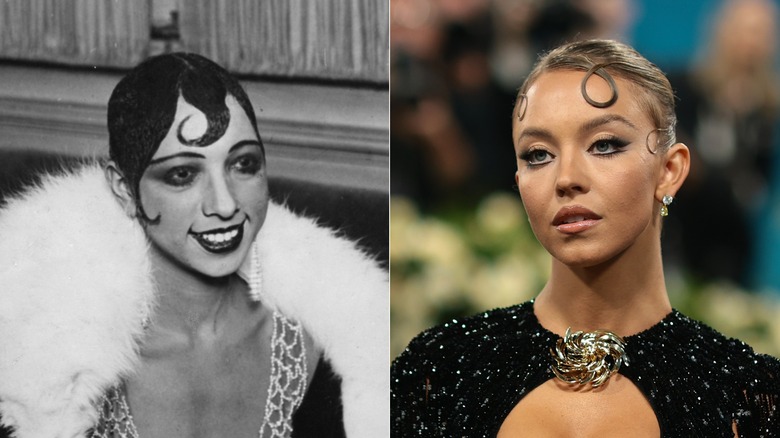
Eton crops and kiss curls were popularized by flappers in the 1920s. The Eton crop describes an ultra-short hairstyle that's combed flat against the head, while kiss curls are delicate curls of hair that are meticulously styled along the hairline, usually around the forehead, temples, or sideburns. In the '20s, baby hairs and flyaways were often used to create the kiss curls, which were carefully sculpted into circular shapes and ringlets. Wearers would also lather their hair in gels and other oily products to achieve an extremely sleek look.
Actor and dancer Josephine Baker, who has long been remembered as a propeller of flapper fashion, was renowned for her Eton crop with kiss curls. Baker, pictured left above in a 1928 portrait, reportedly used egg whites to slick her Eton crop against her head. Baker's kiss curls were so artfully crafted that she even became one of the first celebrities to create a hair product brand — in her case, a hair gel called Bakerfix.
In recent years, celebrities have returned to elevating their looks with kiss curls. At the 2025 Met Gala, actor Sydney Sweeney, pictured right above, put a modern spin on Baker's signature hairstyle by wearing a slicked-back bun that created the illusion of an Eton crop. Two prominent kiss curls grazed her forehead, while a smaller, subtler curl accentuated her cheekbones.
Banged bobs remain versatile after all these years
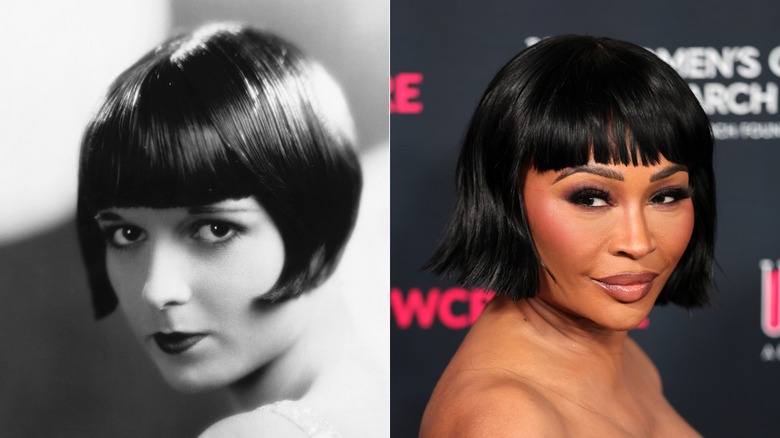
Hollywood icon Louise Brooks helped popularize the banged bob in the 1920s. In her 1925 portrait, depicted left above, Brooks donned an ultra-short bob with blunt bangs. Her bob featured long sideburns that were curled inward and framed her face, mirroring the effect of artfully crafted kiss curls. Brooks wasn't alone in her decision to cut her hair short, either, as the banged bob was embraced by many flappers. Not only was it favored for its practicality and versatility, but the ultra-short hairstyle was also beloved for adding a rebellious and youthful allure to one's look.
The banged bob has maintained its versatile reputation and even regained popularity in recent years. At a Women's Cancer Research Fund event in 2026, reality star Cynthia Bailey, pictured right above, debuted an ultra-short banged bob on the red carpet. While the revived style looks remarkably similar to that of the 1920s, it still has a modern twist: Contemporary versions often omit the bold, curled sideburns seen in styles from the '20s. Bailey's bob, for one, featured a choppy finish that gave her a casually chic finish. Seeing her, we're really glad that this Old Hollywood hair trend has had a comeback.
Stars like Zendaya are bringing finger waves back
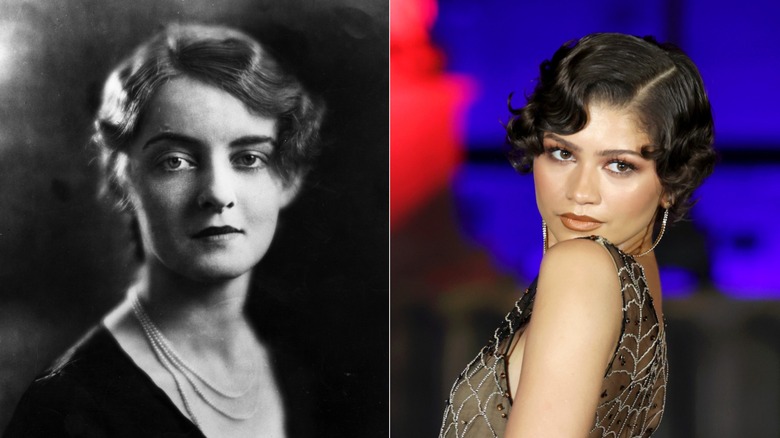
Actor Bette Davis, pictured left above in a 1929 portrait, and Josephine Baker were early advocates of finger waves. The meticulous hairstyle took time to craft, but the attention to detail didn't stop it from retaining its trendy status in the 1930s and 1940s. To create finger waves, flappers would use a fine-tooth comb and comb their tresses with gel. They would then shape their wet hair into S-shaped waves. Hair clips were then added at the end to maintain the arc of the soft wave and hold the hair in place as it set. Interestingly, finger waves were often used to soften the blunt Eton crop.
Fast-forward many decades, and finger waves have made a comeback. In 2026, actor Zendaya, pictured right above, made headlines after she wore finger waves to the "Spider-Man: Brand New Day" premiere in Italy. Zendaya's hair featured soft waves with flicked-out ends that added a vintage touch to her look while still appearing editorial and fresh for today's standards. While modern styling tools have evolved and made the technique much easier to master, the hairstyle itself remains almost unchanged from the way it looked in the 1920s. "What I'm loving about this new generation is that they want finger waves, but they're saying 'I just want them in the front' or 'I just want them on the side and I want to leave my natural curls looped in the back," hairstylist Guido Palau told Fashion. How chic is that?
Shingle hairstyles are sleeker but still reminiscent of the 1920s
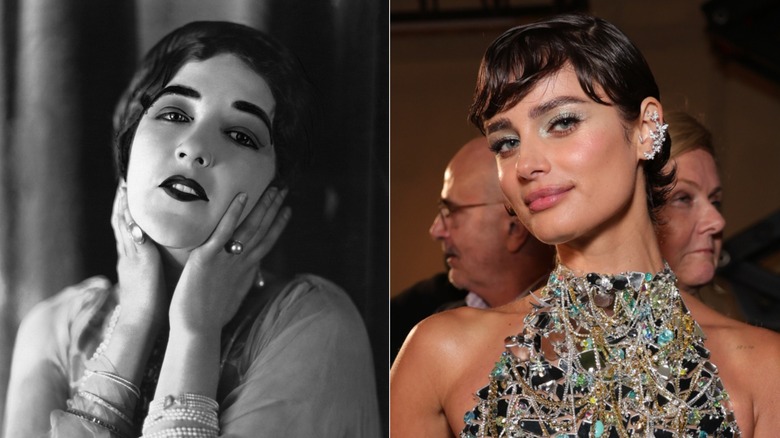
The shingle hairstyle was a signature part of actor Aileen Pringle's look. The shingle hairstyle mimics the look of an overgrown pixie cut or Eton crop, and Pringle, pictured left above, wore her staple hairstyle for a portrait in 1924. "It's a short, structured bob cut that exposes the hairline of the neck, and gradually lengthens towards the front to sit at cheek level," hairstylist Tom Warr told Stylist. The shingle takes its name from "shingling," a hairdressing technique that creates neatly stacked, angled layers.
While the hairstyle maintained a short, close-cropped shape, it often featured soft waves and a tapered silhouette that also distinguished it from the sleek finish and blunt lines of the traditional ultra-short bob. Nevertheless, as another shorter hairstyle that helped redefine how women were perceived, Pringle's shingle undoubtedly made its mark, often being remembered as one of the most iconic hairstyles to be born in the 1920s.
Nowadays, the shingle hairstyle has been revived in interesting ways by some celebrities. At the 2025 Vogue World event, model Taylor Hill, pictured right above, paired her encrusted gown with a shingle haircut. Hill's modernized shingle hairstyle featured significantly less volume than Pringle's shingle in the 1920s. Interestingly, contemporary shingles have been reimagined in slicker shapes that are reminiscent of the 1920s Eton crop.
Curly bobs are a Hollywood classic
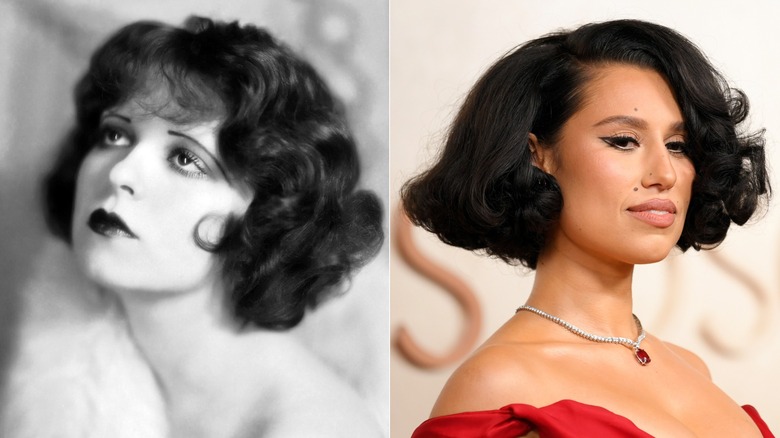
Curly bobs were an alternative option for women who wanted to embrace a shorter hairstyle without fully going for an androgynous look. At the beginning of the decade, flappers embraced bobs with frizzy curls and a fringe, a style that later gave way to sleeker finger waves, to add a free-spirited touch to their looks. Actor Clara Bow was just one flapper who donned the statement hairstyle, even having it in her 1927 portrait, pictured left above. Her hair featured tight pin curls that added volume and frizz. To achieve the playful hairstyle, flappers with naturally straight hair would typically set their hair in pin curls throughout their hair, including their bangs.
Since the 1920s, curly bobs have evolved to include longer lengths and varied volumes. More specifically, curly bobs paved the way for glamorous lobs in the 1960s and 1970s, and contemporary curly bobs have been reimagined as a lob-length cut with curled ends. At the 2025 Academy Awards, singer Raye, pictured right above, paired her regal red gown with a bob that featured curled ends. The top of her hair had a deep side part that was carefully sculpted into a voluminous combover. Despite the polished finish, Raye's curls retained the frizz and dimension of Bow's curly bob way back in the 1920s. Her tight curls, which were styled both inward and outward and featured flicked-out ends, were also reminiscent of Bow's pin curls.