

Makeup Products Banned On The Set Of Downton Abbey & Other Beauty Rules The Cast Had To Follow
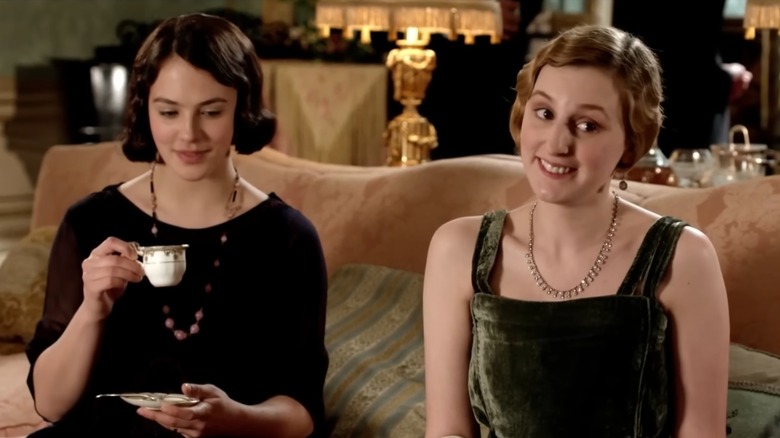
Period dramas seldom prioritize historical accuracy when it comes to costuming and glam. Take the Netflix hit series "Bridgerton" — while the elaborate gowns, flawless manicures, and polished makeup looks are beautiful, experts online have discussed how they are very loose, fantastical interpretations of Regency fashion. However, the crew behind the Edwardian drama "Downton Abbey" took a different approach to styling. The makeup and hair team were surprisingly rigid in maintaining historical accuracy, as they notoriously banned mascara from the set.
During a 2012 interview with Vogue, actor Michelle Dockery (who portrayed Lady Mary) explained why production barred the use of mascara for cast members. "Historically, women wouldn't have been introduced to those kind of products then, so we can't use them," Dockery said. Instead, the team would dye cast members' eyelashes to achieve a look that was both accurate and glamorous. Given the strict beauty rules that were enforced during production, it's no shock that what the cast of "Downton Abbey" looks like in real life is far different from their on-screen counterparts. (In fact, Michelle Dockery is unrecognizable without dark hair, which she rocked on the show). The actors were also asked to not pluck or wax their eyebrows while filming in order to maintain the natural look that women of all classes had during the Edwardian period.
"Downton Abbey" makeup and hair designer Anne Oldham explained that she utilized sheer foundation from brands like Chanel and Armani "as little as possible under the eyes" to create a look that enhanced the cast's natural features without appearing too heavy on camera. "For the 'Downton' girls, I leave the eyelids free of makeup. That allows you to see a slightly pinker area of skin, which gives the impression of no makeup on the rest of the face," Oldham told Vogue.
The beauty team on Downton Abbey maintained historical accuracy across eras
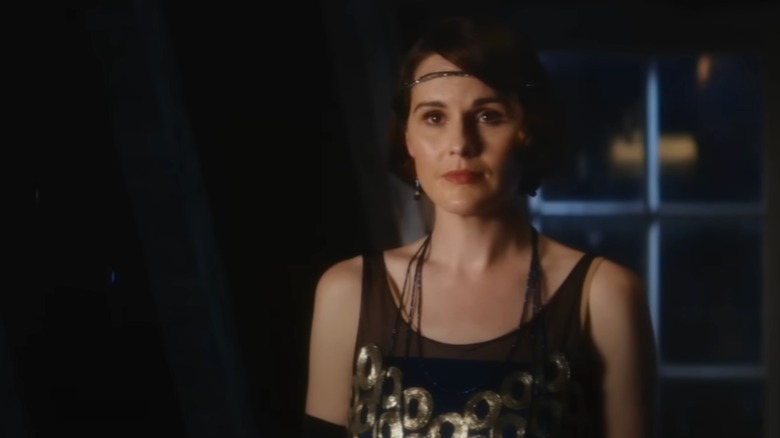
Even as the "Downton Abbey" television and film franchise moved from the early 1900s to the 1930s in adaptations like "Downton Abbey: A New Era," the makeup and hair designers remained dedicated to accuracy. Their strict rules, such as a ban on mascara and eyebrow maintenance, were put in place to ground the series in reality for women of the era. Like the most iconic outfits to ever be worn by "Downton Abbey's" leading ladies, the on-screen glam was created with heartfelt intention and the utmost attention to detail.
In a 2022 interview with Town & Country, "Downton Abbey" makeup and hair designer Anne Oldham recalled the differences in style and technique between the show's first season (set in the 1910s and '20s) and the '30s setting of "Downton Abbey: A New Era." "When we started the first season, the looks were completely natural. The makeup we used on them was really, really minimal," Oldham said. "Now that we're knocking on 1930's door, you've got a much stronger makeup look. So stronger eyebrows, stronger colors on the mouth, that sort of thing."
However, the cast still maintained realism in their carefully-crafted makeup and hair looks: natural for daytime scenes, and somewhat moodier for formal events and night shoots. Emphasis on "somewhat" — Oldham and her team erred on the side of minimalism for most scenes. "We wouldn't necessarily go full-on 1930s. We tried to still echo the period, but keep it really natural, and then push the period more in the evenings," she said. Oldham and the "Downton Abbey" production team's impressive dedication to historical accuracy ensured that the beloved franchise stayed as true to its source period as possible.