

Makeup And Beauty Companies That May Not Be Around Much Longer

With the rise of BeautyTok, the beauty industry has boomed. The late 2010s and early 2020s brought an unprecedented interest in the space, with celebrities releasing makeup lines like a rite of passage, infinite brands popping up overnight, and consumers left feeling overwhelmed by the sea of choices. But in the second half of the decade, the boom is losing some of its power. The Covid-19 pandemic kicked off a chain of events that have taken a few years to fully play out, but now we're seeing inflation and higher interest rates which have led to supply-chain issues and increased costs across the industry, not to mention the new ways that customers are shopping. A global cost-of-living crisis has resulted in some former customers no longer allocating funds for beauty and cosmetic products, while those who do are turning to resources like pay-later apps, which raise business fees.
"Many companies in fashion and beauty have struggled with sales and paying their debts," John A. Simon of law firm Foley & Lardner explained to Vogue in 2023. "This has created conditions that are ripe for company insolvencies in the industry. We're definitely seeing more of them." Beauty companies in deep financial trouble typically either take a non-insolvency route focused on board changes and restructure, or they go into insolvency. This includes the Chapter 11 filing, known as bankruptcy in the United States. Cosmetic brands like SBLA Beauty and Revlon have either restructured or filed for bankruptcy in recent years, hinting that their future could be in jeopardy. The good news for customers is that insolvency isn't a guarantee that a company is doomed. As attorney Katie Catanese told Vogue, "The strong will survive, and they're going to buy the weak, and we're going to end up with new kinds of companies."
SBLA Beauty has had to restructure in 2025
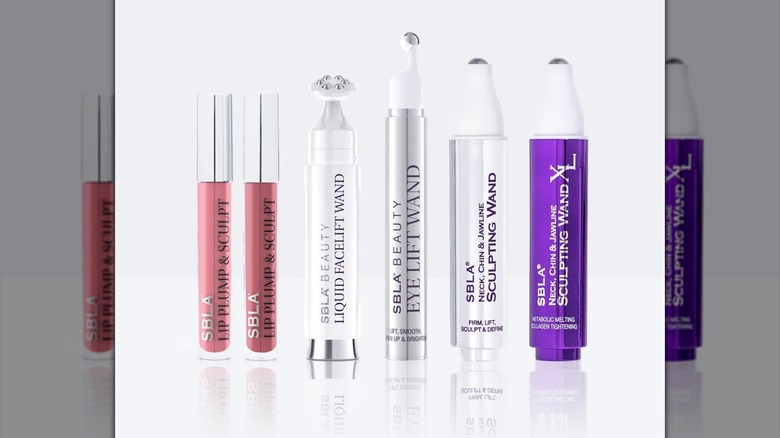
SBLA Beauty has had an impressive track record. The Beauty Innovation Award-winning brand was founded by Randi Shinder, the brains behind the noughties brand Fusion Beauty. SBLA is best-known for the Eye Lift Wand and the Neck, Chin, & Jawline Sculpting Wand, with its website stating that the brand's mission is to "deliver scientifically researched anti-aging products in our [wands] with anti-microbial application and airtight, active, good for you ingredients." In March 2025, SBLA filed for Chapter 11 protection with the goal of restructuring and refinancing. It's estimated that SBLA was between $1 and 10 million in debt leading up to the filing.
In a statement to the New York Post, Shinder confirmed that the filing didn't mean the end of the brand. "SBLA Beauty has consistently maintained and will continue to be a widely successful brand with a loyal consumer following," she said. "This is a reorganization and restructuring to ensure profitability." The brand is also still on Instagram, but customers have noted in the comments that it can often be challenging trying to get in contact with the customer service team, or getting refunds for missing products. "I'm still waiting for answers regarding use and expectations," one customer commented on a post, with another confirming, "I have also sent multiple emails to customer service over the past year, and nobody responds!! I have been a loyal customer, and now can't even get a response from you."
Despite still being active on Instagram, SBLA has not posted anything since June 2025, and prior to that, had not posted since January. The dwindling posts and lack of responses together with the filing could spell out bad news for the brand, or it could mean it is in the middle of a restructure.
Cutera has been struggling with millions in debt
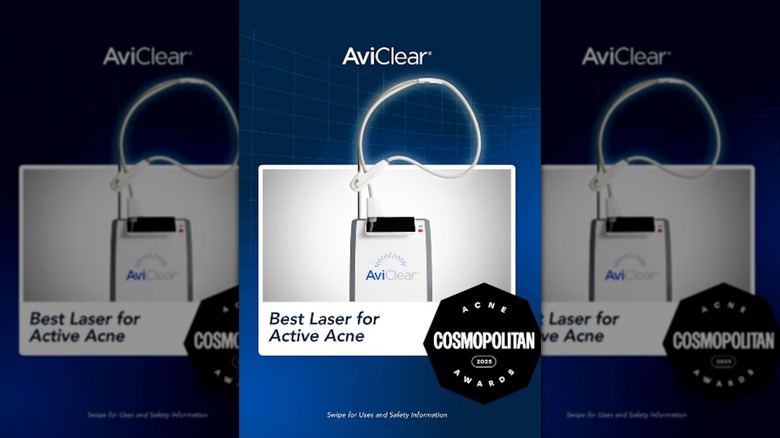
Cutera stands out from other brands in the beauty space as it leans into aesthetics through dermatology. "We are an energy device company bringing the look-good, feel-good business into the future by bridging aesthetics and dermatology in ways that have never been done — all in pursuit of results that have never been seen," the company declares on its website. Its range of products include treatments and machines which target everything from acne to hair removal. Despite existing in a less saturated part of the market which has proven to be beneficial for the consumer (getting multiple skincare treatments at once is smart), Cutera began a restructuring process, including a Chapter 11 filing, in March 2025.
"[Cutera] today announced that it is initiating a restructuring transaction with the support of a group of existing lenders, representing approximately 74% of the Company's notes, to strengthen its balance sheet and position Cutera for long-term success," a statement on Cutera's website reads. However, like SBLA, Cutera claims that this isn't necessarily the end. " Through the transaction, Cutera will reduce its debt by nearly $400 million, or over 90%, and raise $65 million in new money from its existing lenders ... Cutera will operate as usual throughout the court-supervised process and continue to provide best-in-class solutions to its customers around the globe without disruption."
Leading up to the filing, Cutera was struggling to pay bills and dealing with cash-flow issues as inflation affected the spending of its target market. As the brand operates in a higher-end space than the average beauty brand, it's also likely affected by changing consumer priorities. For now, the website still offers the option to enquire about the treatments and services, but only time will tell whether the restructuring initiative is successful.
Revlon bounced back from bankruptcy, but is that enough?
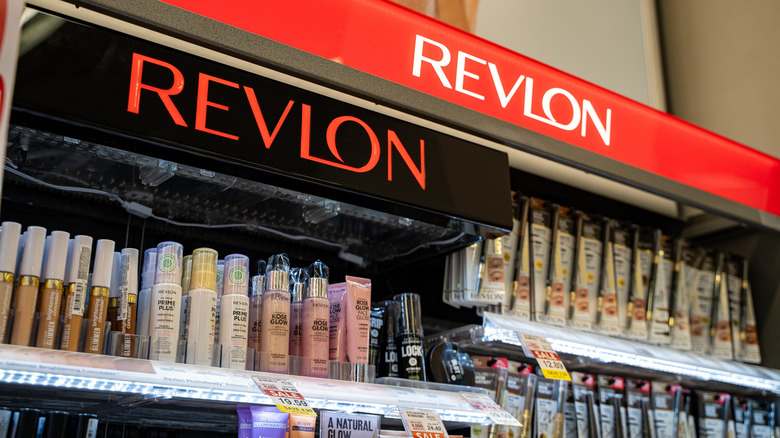
Once a brand reaches the heights that Revlon has reached, it might seem like its ongoing success is a given. But we know success is never guaranteed; just look at what happened to Bite Beauty. Revlon, which holds more than 15 brands in its portfolio of cosmetics, skincare, fragrances, haircare, and more, filed for Chapter 11 bankruptcy in June 2022. The COVID-19 pandemic is believed to have been a big contributor to the brand's financial issues, and at the time of the filing, Revlon was $3.5 billion in debt and was struggling to make payments to vendors.
The following year, Revlon was able to clear $2.7 billion of its debt and officially come out of bankruptcy. Among the brand's new owners were money-minded institutions like King Street Capital Management and Oak Hill Advisors. "We look forward to unlocking the full potential of our globally recognized brands and continuing to offer our customers the iconic products they have loved for decades," CEO Debra Perelman said in a statement obtained by Reuters.
But despite these positive developments, beauty influencer Robert Welsh suspects that Revlon is slowing down its operations since "it just kind of goes under the radar" amongst all the competition. Welsh noted that the brand's marketing of new beauty products has been lacking, while its focus seems to be concentrated on hair products (if you're thinking of browsing, first check out our guide to hairbrushes and when you should use each type). After asking his viewers if they use Revlon products, Welsh guessed that they're "on their way out" since they don't seem to be introducing fresh new ideas to the market, even after bouncing back financially.
The Body Shop has quietly been closing stores
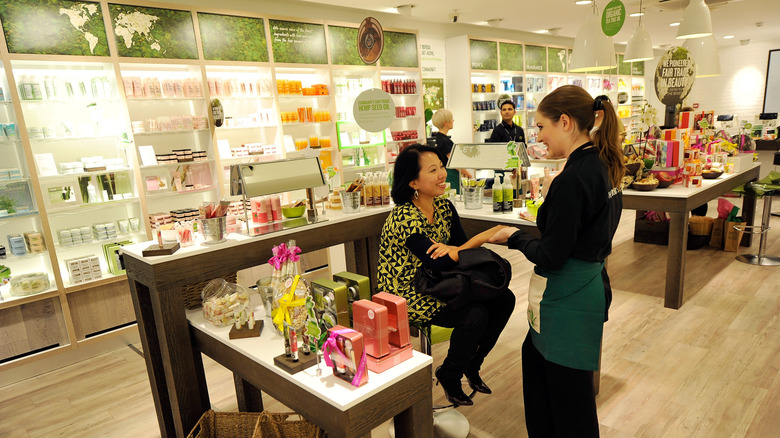
Robert Welsh has also predicted that The Body Shop, a brand known for its bath and body, skincare, and fragrance products, could be facing a bleak future. "Listen, they don't have that unique selling point anymore, being cruelty-free," he explained on YouTube. "The Body Shop is one of those brands where, again, it feels like they haven't caught up with the times. It's giving Avon ... The Body Shop is something where, I think if it went, not a lot of us would miss it."
While this is pure speculation on the beauty influencer's part, the company did file for bankruptcy in the U.S. and Canada in 2024, with its assets being sold to help pay off debts. This led to 33 of its 105 stores in Canada closing, resulting in over 200 jobs lost. Meanwhile, The Body Shop also filed for bankruptcy in the Netherlands at the end of 2024. The company is reportedly struggling to make payments in its Australian and New Zealand branches, where it still has 120 stores but an unstable future given its financial woes.
The Body Shop is still actively posting on Instagram, but some comments from customers point to further troubles with customer service, management, and inventory. "What's going on with your makeup lines?" one customer asked on a November 2025 post. "I've been asking about the foundation for 6 months with no response. Looks like you are discontinuing all the makeup. Be nice to know what's happening so I can find another brand." Another customer expressed their disappointment on an earlier post from the same month: "Having been a loyal fan since the 90s I don't use anything anymore as you've discontinued all the amazing products and changed the formulations of the existing ones."
Birchbox may have to rethink its business model
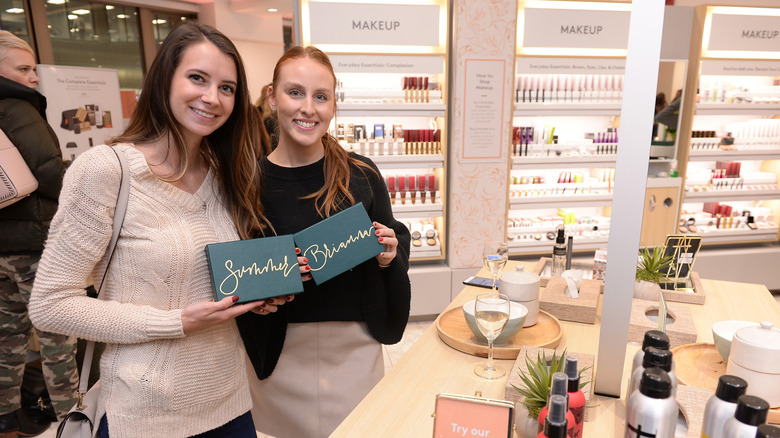
Subscription box brand Birchbox is the perfect example of how volatile the beauty market can be. In the 2010s, the subscription model was a fool-proof business method, leading to a value of over $500 million at Birchbox's peak. But now it's leaning more towards being a relic of a bygone era. After its beginnings in 2011, Birchbox was thriving by 2014, as the wave of subscription-based businesses took off. But in 2021, it was acquired for just $45 million. By this time, the subscription model was completely oversaturated in the beauty space, and Birchbox had actually been scaling back since 2016. In 2022, the owners took to social media to let customers know the truth. "Birchbox is facing a host of unprecedented setbacks that are affecting all of you, our cherished members," the since-deleted post said (via Business Insider). "Within the next couple of weeks, we will be able to share details about the future and what you can expect."
Unfortunately, 2023 brought further negative changes. While Birchbox raised its prices, annoying customers, the owners were legally served over unpaid bills. That same year, Birchbox was acquired by investment company Retention Brands. Brands can bounce back from financial trouble, but Birchbox's issue remains that its core business concept is becoming increasingly outdated. Having mini makeup products delivered monthly was once revolutionary, but now the brand is competing with several others who offer similar services as part of their larger business models, including Sephora and the Australian giant Mecca, which offers free beauty boxes based on a tiered membership system.
That said, it's not all doom and gloom. These "Shark Tank" beauty pitches have still seen success, even if they didn't get a deal, so anything is possible in the world of beauty.