

Olympic Ice Skaters Have To Abide By Some Strict Fashion Rules
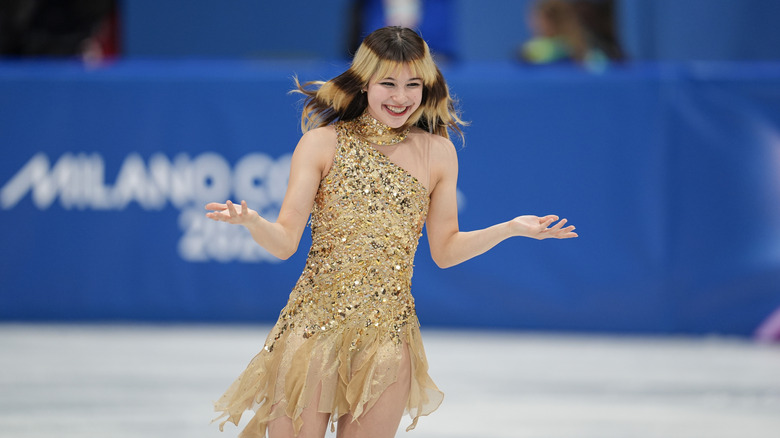
When professional ice skaters make their way onto the rink, the first thing many notice is their costumes. Sure, fans are there to watch the amazing triple Lutzes and jaw-dropping choreography, but the fashion is there to draw attention. You may think that Olympic skaters just throw on a sparkly leotard and call it a day, but there's surprisingly a lot of thought that goes into dressing for competition. "When I'm making a dress, that energy of consciousness is imbued in the very fabric. The dress designs itself," custom designer Pat Pearsall told ESPN. And, because of some very strict rules, every embellishment must adhere to the outfit perfectly. "If I'm putting a lot of stones on a dress, I could go through two tubes of glue," Pearsall shared.
The conditions that Olympic figure skaters have to follow aren't just loose guidelines. If they aren't observed completely, they can get penalized, which means lowering their chances at winning the gold. Thankfully, the athletes usually have months to plan their 'fits, which means having time to get them just right and regulation-ready for the big competition.
The costumes can't be too theatrical
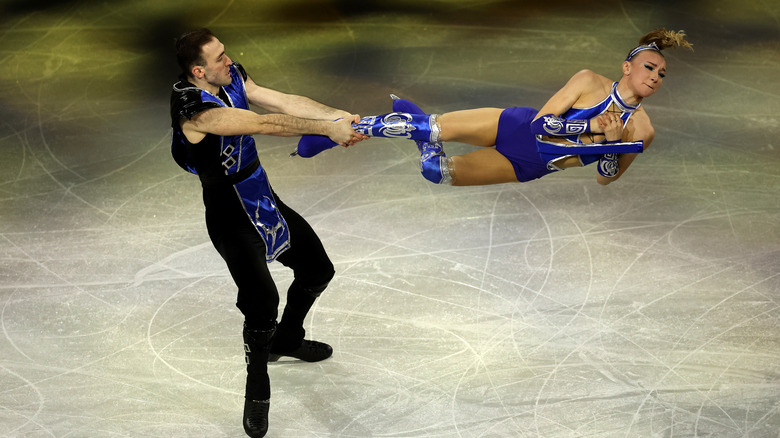
One would think that figure skating and ice dancing are all about theatrics, as they're full of twirls, jumps, and sparkly outfits, but according to the International Skating Union (ISU), the costumes must be "dignified and appropriate for athletic competition — not garish or theatrical in design." While the reason isn't listed in the rule book, The Atlantic shared in 2014 a very good theory that had to do with how flashier clothing can lead to the judges' bias. The publication referred to 1994 performances by Nancy Kerrigan and Oksana Baiul, where the former wore a simple white outfit, and the Ukrainian skater donned a more eye-catching pink dress with feathers and sparkles. When the two tied, Baiul ultimately won the gold on artistic merit, so perhaps her ensemble caught the judges' eyes more.
Although costumes can't be too theatrical, the rule states that they can be chosen to match the skaters' song choices. Olympic gold medalist Alysa Liu has rocked some eye-catching hair looks and 'fits on the ice. She told Yahoo! Sports about her design process, saying, "I start planning as soon as I hear the music. It just comes to me, like the colors of what the dress could be." Olympic athlete Amber Glenn, who also had some of the most stunning outfits on the ice, revealed, "You have to have a figure skating outfit picked out pretty far in advance. You have to give the dressmaker a lot of time, and then you have to come up with a creative idea and something to match the music." As for what's considered "garish," we guess it's completely up to the judges.
Competitors can't wear clothing that makes them appear nude
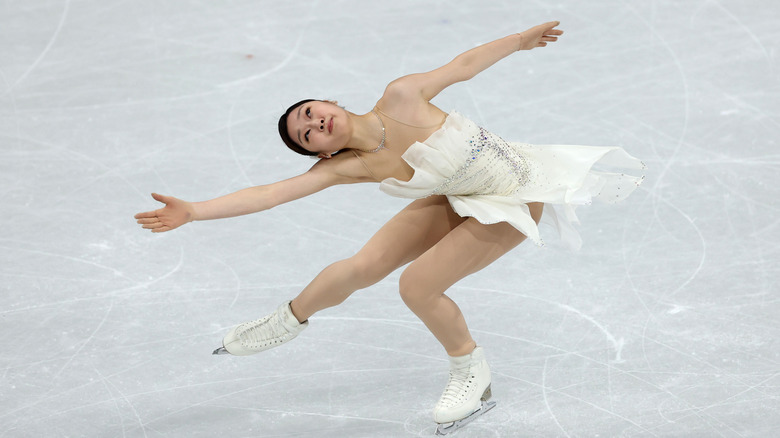
Figure skaters have to wear lightweight and airy clothing while on the ice, which often means their designers turn to sheer fabrics. However, the ISU states that the appearance of excessive nudity is strictly prohibited, so showing too much skin will result in points being deducted. This was all due to Katarina Witt competing in a blue costume that bared her body a bit too much for the organization's liking in 1988, so the modesty code got added. "The rule is you have to have 50 percent of your body covered. But there have definitely been slips," Olympic medalist Mirai Nagasu shared with Today.
The way skaters get around the modesty rule is with tons of nude fabric, per Bustle. This way, they can wear dresses that appear strapless while still being covered and avoiding a wardrobe malfunction at the same time. It also gives the appearance of the clothing being sheer, without actually showing too much skin. Who knew that nude panels were the true MVP of Olympic ice skating?
Points off for any accessories or clothing items that touch the ice
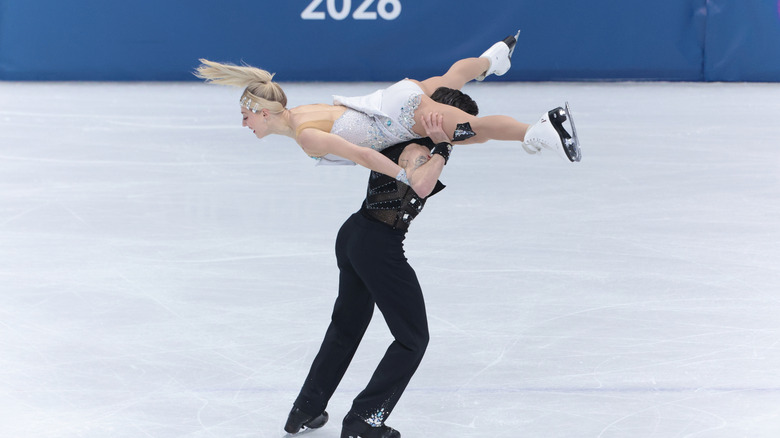
With all the embellishments and hair accessories figure skaters wear, it's easy to imagine a sequin or bobby pin flying off, but that's a hard nope for the ISU. If anything other than the blades of the competitors' skates touches the rink, they can face a point deduction. That's why designers ensure that every rhinestone is properly glued on, and the outfits have multiple fasteners on every opening. "Redundancy in closures, if you've made costumes for any length of time, is absolutely imperative," costumer Pat Pearsall noted to ESPN.
Fans saw some of the best fashion moments from the 2026 Winter Olympics, but one outfit almost caused a transgression, had it not been for some quick maneuvering. As reported by the New York Post, Paul Poirier's arm cuff got detached and was stuck on his ice dancing partner, Piper Gilles' stockings during a lift, but she quickly grabbed it as he set her down. The pair managed to snag the bronze medal, and we have to give Gilles points for her deft move.