

Classic Perfumes From The '70s & '80s That Are Still Popular Today
We may receive a commission on purchases made from links.
Picking a signature fragrance is a rite of passage for many women. Though many of the best perfumes on the market can be a bit pricey, there are plenty of good reasons to splurge on your favorite perfume and wear it every day. Once you find a fragrance that you love, whether for its unique scent, staying power, or how it blends with your body chemistry, you'll likely decide to keep it in your daily routine for years. Given that many choose to continue wearing their signature scent long-term, it's no surprise that some of the most popular fragrances have been in production for decades.
In fact, some of the most highly-regarded perfumes of today were also huge hits in the 1970s and 1980s. Perfume enthusiasts regularly flock to communities on X and Reddit to discuss their favorite modern and vintage fragrances — some of the latter are still available to purchase through their original manufacturers. From Chanel to YSL to Clinique, these are some of the most iconic fragrances of the '70s and '80s that have retained their popularity throughout the 21st century.
Chanel No. 5 has been endorsed by many celebrities over the years
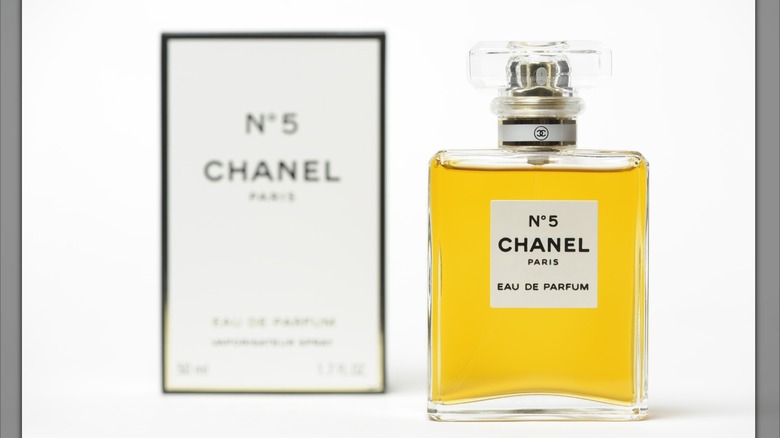
Chanel No. 5 is perhaps one of the most iconic fragrances of all time. Although it debuted in 1921, the perfume has remained a fixture in many women's fragrance line-up well into the 21st century; after all, a bottle of No. 5 is sold every 30 seconds, per NPR. Chanel's best-selling perfume was a trailblazer in the world of women's fragrance. During the era in which it debuted, most perfumes were based upon one scent only, usually a single flower. No. 5 combined several notes, including rose, jasmine, and citrus, as well as popularized the use of aldehydes, which are scent compounds that provide a clean, bubbly undercurrent, to formulate its iconic aroma (per Who What Wear).
While the perfume's impactful ad campaigns of the 1950s included Hollywood legends like Marilyn Monroe, who famously cited the perfume as all she wore to bed in 1952, some of No. 5's most iconic advertisements come from the 1970s. In fact, Chanel No. 5 experienced a revival after French actor Catherine Deneuve joined the fragrance's new campaign in 1972. The campaign, which was designed to rebrand No. 5 as a more sophisticated, seductive fragrance, was a resounding success; Chanel No. 5 became a go-to fragrance for women of the decade (and has stayed that way ever since).
Dior's Poison was one of the biggest perfumes of the 1980s
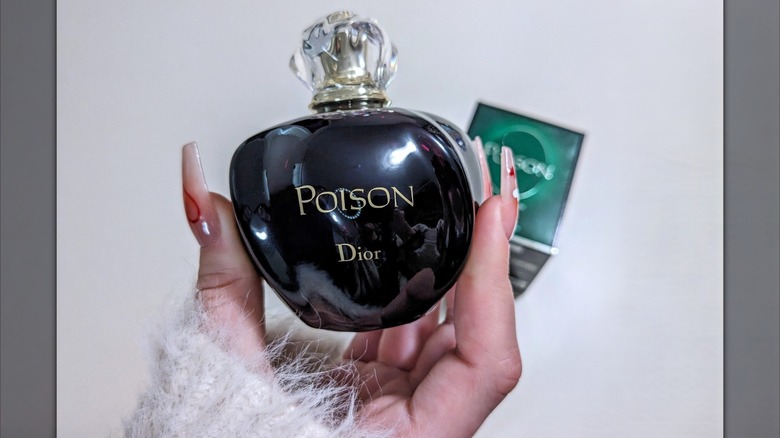
Christian Dior has many iconic fragrances in their best-selling perfume lineup: J'adore, Miss Dior, and, of course, Poison. The original Poison was created in 1985 by perfumer Edouard Fléchier, and immediately took the fragrance world by storm. It was unlike anything else on the market, with sweet, floral notes like plum, ylang ylang, and tuberose combined with a heady base of amber, incense, and musk — and its unique, apple-shaped bottle put a sultry twist on the classic "Snow White" fairytale. While in the process of developing Poison, then-CEO of Parfums Christian Dior Maurice Roger asked 10 very refined Parisian women to test a set of sample perfumes; Roger decided that the fragrance the group liked the least would become Poison. It's no wonder, then, that the fragrance became as controversial as it was beloved for being "too much" (via 29 Secrets).
As perfumes of the 1980s began to shirk the light, powdery florals that dominated the '70s market, Poison quickly caught on as one of the most powerful scents of the decade. It remained popular in the '90s, and has continued its reign across the 2000s, 2010s, and 2020s with variations on the OG formulations like Hypnotic Poison, Poison Girl, and Pure Poison.
YSL's Opium was in competition with Dior's Poison for the most iconic scent of the '80s
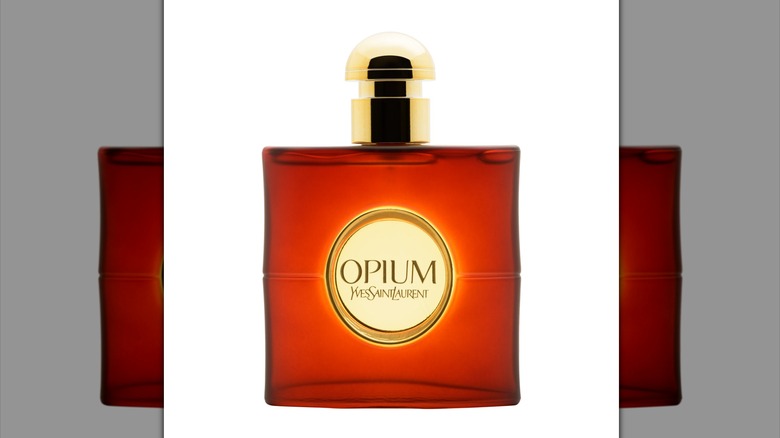
Like many beauty products of the 20th century, Yves Saint Laurent's Opium has changed in formulation from its original version. In 1977, YSL launched what would be its most popular and most controversial fragrance: Opium. The name immediately sparked outrage, especially from the Chinese American-founded American Coalition Against Opium and Drug Abuse, for its drug allusion. Opium's racy advertisements have even been banned for their provocative nature, with one ad being pulled from UK broadcast as recently as 2011 (per The Guardian).
However, the early controversy actually helped the fragrance's initial sales, and Opium dominated the perfume world in the late 1970s and throughout the 1980s. In North America, Opium was the top fragrance launch of the year, generating $3 million in sales from September 1978 to June 1979 (per 29 Secrets). Even in the 21st century, Opium continues to be one of the most popular scents in the beauty industry. In 2015, YSL launched Black Opium, a more delicate take on the original; since then, its grown more popular every year. YSL told The Zoe Report that Black Opium sold 887 bottles per day in 2019 (a staggering 36 bottles per hour).
Clinique's Aromatics Elixir is a niche hit in the 2020s
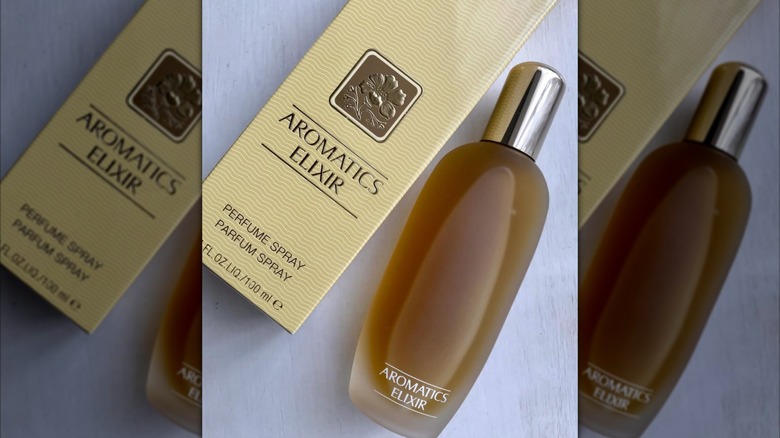
When you think of Clinique's perfumes, a relatively new best-seller like Happy is what first comes to mind. However, Aromatics Elixir, the oldest Clinique fragrance still on the market, is still beloved today by perfume enthusiasts. The perfume is a distinctly '70s chypre-floral, with top notes of chamomile, sage, and aldehydes, ylang ylang, tuberose, and jasmine at the heart, and heavy base notes of patchouli and vetiver. While not as heady as Opium or Poison, Clinique's Aromatics Elixir is a bold, long-lasting fragrance that you either love or hate.
The perfume was created by perfumer Bernard Chant in 1971 for the then-new Estée Lauder brand Clinique, and was marketed as a fragrance that was ahead of its time (per Scents and Sensibilities). They must have been right, because, despite Aromatics Elixir's old school patchouli base, many still hail the perfume as a classic even 55 years later. For the fragrance's 40th anniversary in 2011, Clinique launched a limited edition version of Aromatics Elixir that toned down the jasmine and patchouli in favor of bergamot and orange blossom. The small changes were received positively by fans, who largely felt that the new version was superior yet kept the original's iconic essence and staying power.