

Younger Generations' Dating Trends That Boomers Wouldn't Understand

In the divide between baby boomers and their younger counterparts, there's one issue that seems to get both sides up in arms. When it comes to finding love, each generation has its own unique challenges, and these major differences have given rise to some fun (and not so fun) new trends. On this front, boomers often can't see eye to eye with generations Y and Z
Dating approaches like "DWM" are just too foreign to folks who have traditionally followed a conventional path to finding love. To be fair, not even all millennials can get on board with the concept of turning your date into content creation, so it's easy to see how this one doesn't translate across the gap. Then there are other trends, like wildflowering, which do have benefits, even if they don't align with the more conservative "date to marry" blueprint that boomers are known for.
Of course, there are some newer dating trends that boomers would probably love if given the chance. Future-proofing, for example, is the opposite of a relaxed dating approach like wildflowering, where the goal is to ask your date as many important questions as early as possible to find out whether they fit in your future or not. This speedy strategy is more likely to fit the bill for a demographic whose median age of marriage for women was just 22 in 1980, according to data from the National Center for Family and Marriage Research. Boomers, in all their resilience and perseverance, might also get behind stICKing, which sees daters ignoring the "ick" that might have otherwise turned them off a new relationship. But despite some dating moves getting their approval, there's a lot about the modern dating world that would be hard for many older people to accept.
Boomers don't really approve of situationships

The term "situationship" was first established by writer Carina Hsieh back in 2017 as a "hookup with emotional benefits," per Psychology Today. Unlike a friends with benefits arrangement, situationships are both physical and emotional, but they don't carry the commitment, intention, or public declaration that normal relationships do. A 2024 YouGov poll found that half of American adults between 18 and 34 have been involved in a situationship, which shows that it's less of a passing fad and more of a shift in the overall contemporary dating scene.
Speaking to Refinery29, relationship expert Beth Ashley noted that women are judged more harshly for having situationships than men are. "Generally, when we see women in situationships, we consider them trapped and make a lot of sexist assumptions that they aren't there by choice," she told the outlet in 2024. "We never consider that a woman might be right where she wants to be, having a sexual and flirtatious connection with someone without the pressure of commitment looming over her." And to be fair, there are some pros to the concept. Situationships allow you to enjoy some of the perks of a relationship with flexibility. There's more freedom and less pressure, because participants can avoid formal labels and the expectations that come with them.
But the idea of an entanglement that isn't a formal relationship and also not a booty call, but somewhere in between, just doesn't sit well with all boomers. "I don't understand younger peoples' obsession with seeming cool or uninterested," Laura, a woman born in 1955, admitted to Purewow. While situationships do have their advantages, the older generations might be on to something; these arrangements generally aren't a good fit for those seeking certainty, loyalty, commitment, or a deeper emotional connection.
Ghosting has always been around, but the younger generations have normalized it

Even for someone totally oblivious to the modern dating scene, it's pretty easy to guess what ghosting is. If the person you're seeing suddenly drops off the face of the earth with no contact and no explanation, they're essentially pulling a Casper, and it never feels nice to be on the receiving end. Unfortunately, a 2020 report conducted by Pew Research found that 30% of Americans had been ghosted.
Probably since the dawn of time, there have been people who disappear from relationships without explaining themselves, leaving a path of emotional destruction in their wake. It seems easier than having tough conversations and confrontation, after all. But the trend has majorly increased among the younger generations, primarily because they're operating in the age of dating apps. "Traditionally, you'd meet someone through friends or at work, so it was harder to just disappear," relationship counselor Rachel Sussman told Refinery29. "Now, when you meet someone online, there's no six degrees of separation. There's no accountability. So you can disappear and feel confident you're never going to run into them again in your life." So while boomers might grasp the concept of ghosting, they're probably less inclined to accept how normal it's become.
Though even younger folks are being encouraged to hop on the anti-ghost trend, there are some situations where ghosting is more acceptable. If abuse is involved or you're in danger, you don't owe anyone a face-to-face explanation. Netizens are also divided on whether it counts as ghosting if you haven't actually met in person yet — a conundrum boomers didn't have to worry about. According to one Reddit thread, it's generally seen as less harmful to ghost someone on a dating app before a first date.
Benching doesn't align with the boomer approach to dating

Benching is another younger generation dating concept that isn't necessarily foreign to boomers. But something that might have been frowned upon before has become standard because of the environment created by dating apps, which completely misaligns with a more traditional attitude towards dating. Essentially, if you're benched, someone did see potential in you, but they don't quite like you enough to have you playing for the team right now. So you're on the bench until you're needed, if that moment ever comes. In dating, this typically looks like the person you're seeing contacting you enough to keep you around, but not actually committing.
Stringing people along is unfortunately nothing new, but benching is more of a strategic, intentional dating approach that some coaches encourage. Dating coach Grace Lee told the New York Post that this strategy is actually useful when you're trying to meet a long-term partner, because you can fully explore and weigh your options. However, she does stress that it's important to be honest about your intentions — don't bench someone and make them feel like they're your top choice at the same time.
In a 2016 reader survey conducted by Minnesota Monthly, anonymous boomers and millennials gave insight on how their attitudes towards finding love differ, and frankly, these opinions sum up how trends like benching have been able to prosper in the modern scene. "We all want somebody to love, but I think many [millennials] are willing to delay a relationship until they find someone 'perfect,'" one person answered, while another said, "It's easier than ever to meet single people our age online, there are too many options which makes you wonder what else is out there, and if you are selecting the right person."
DWM: The chronically online dating trend
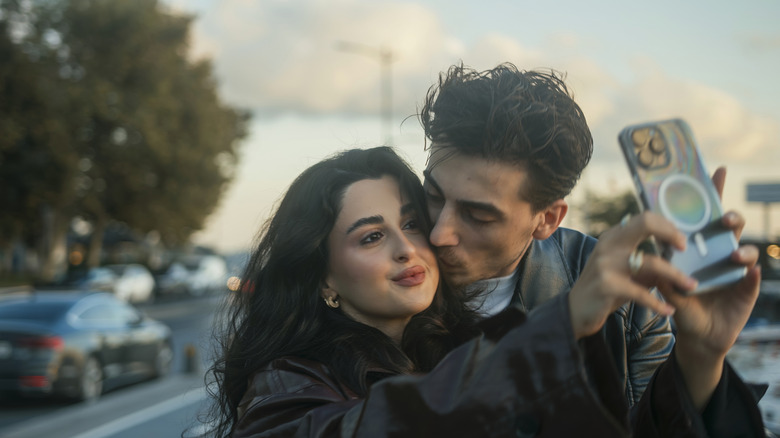
Now, Date With Me, shortened to "DWM," is one dating trend that boomers well and truly didn't have in their heyday. If you're familiar with the TikTok phrase "GRWM," short for "get ready with me," you already know the rest. A dating trend and content creation hybrid, this movement sees content creators sharing their dates with social media. If they're not live streaming from the date itself, they might post a video that shows them getting ready, share inconspicuous footage from the date once they get home, or simply let their followers know how it all went. As if dating didn't come with enough pressure!
Given what we know about the boomer approach to finding love, which tends to be more traditional, and their general insecurity with oversharing online, older folks probably don't quite support this trend. And they have a point: even many millennials don't approve. In one Reddit thread, someone shared that they had discovered their date's DWM TikTok post, and received almost unanimous support condemning the behavior. We generally agree it's not cool to make content out of people without their consent. So why is this even a thing?
In an interview with Cosmopolitan, dating coach Grace Lee explained that this kind of content can be beneficial for other daters, even if doesn't feel great to find out your date chronicled the whole thing for their followers. On the upside, making DWM videos can help with burnout that makes you feel like you should take a break from dating. However, dating coach Blaine Anderson slammed the concept in the same article: "This trend makes dating feel both more exposed and more performative than ever, and it shows how blurred the lines have become between our personal lives and public personas."
Wildflowering has some benefits, even if it's not very traditional

Older generations probably wouldn't think to connect the word "wildflowering" to dating, but this term has been used increasingly in the 2020s. Originally, it had associations with the curious, carefree nature of springtime dating, but has now evolved to refer to a more casual approach to finding love, at any time of the year. Wildflowering simply means letting things bloom naturally, rather than forcing the relationship into a certain direction. The idea is that this attitude helps people struggling with dating burnout, as well as those who are beginning to treat strategic dating like shopping or even a game. It's not quite a situationship, since it may evolve into a fully fledged relationship, but it also might not. Both people are just "seeing where things go" rather than actively deciding they don't want commitment.
There's certainly less pressure with this kind of dating approach, and it might be a particularly good fit for those who deal with anxiety. However, it might also be a time-waster. Even if your senses tell you that the person you're dating isn't right for you, you might ignore them for the sake of "seeing where things go." And of course, this attitude is in stark opposition with the traditional boomer view. "Boomers were following tradition and took the automatic next steps in relationships where Millennials don't want to feel boxed in or told what order they need to follow in life/relationships," one reader mused in the Minnesota Monthly survey.
The world has changed irrevocably since most boomers were navigating the dating scene, so it's no surprise that some trends won't quite resonate. Finding love looks more different now than it has in the past 100 years of dating, so all generations have had to adjust, for better or worse.