

4 Jewelry Trends From The '60s You Probably Forgot About
We may receive a commission on purchases made from links.
While today, statement jewelry isn't what the average person wears on a day-to-day basis, the 1960s were all about bold accessorizing. Designers stopped relying solely on expensive metals to make jewelry and began experimenting with more affordable materials. Since costs were no longer a barrier, jewelry became art, a form of expression rather than a status symbol.
Although pieces made from precious metals like gold and silver were still popular, many of the decade's trendiest designs were made from unconventional materials. Plastic, resin, and vinyl became ultra-popular because they were affordable and super malleable.
But beyond the materials used, even the designs were more experimental. There were unique gemstone placements, intriguing geometric shapes, and optical illusion-inspired designs. While certain jewelry trends that started in the '60s never really died down, others seem to have been forgotten. Some of these discontinued trends would totally feel out of place in our current era, but some might just make their way back.
Plastic Tutti-Frutti jewelry was a huge thing in the 1960s
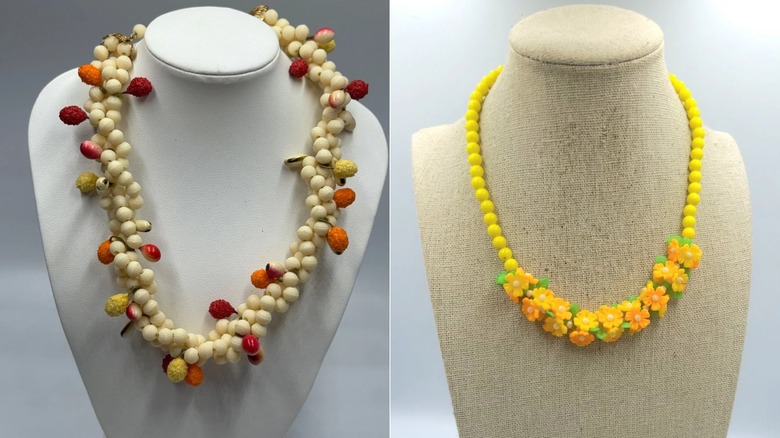
Before the 1960s, Tutti Frutti-style jewelry was a signature Cartier design. These pieces dated back to the art deco era and were made of brightly colored gemstones carved into decorative fruit shapes. Although Tutti Frutti translates to "all fruits" in Italian, the designs weren't limited to fruit. Designers also carved gemstones into flowers, leaves, berries, and other botanical motifs.
When the 1960s arrived, however, this once-exclusive style became far more accessible. Designers began recreating the vibrant Tutti Frutti look using plastic and other inexpensive materials, and people began to embrace this maximalist look without having to shell out a fortune. Interestingly, this jewelry style wasn't officially termed Tutti Frutti until the decade after (it's also often called "fruit salad" jewelry).
Fast forward to the 2000s, and Tutti Frutti-style jewelry is still very much present, although more in the vintage scene. Plastic recreations, however, are currently one of the most outdated jewelry trends, which isn't exactly surprising. The bright color that Tutti Frutti pieces demand, paired with the cheap look of plastic, means that some plastic Tutti Frutti jewelry like yellow piece shown above (via eBay) currently look more like toys than jewelry to the modern eye.
Paper jewelry has completely faded into oblivion
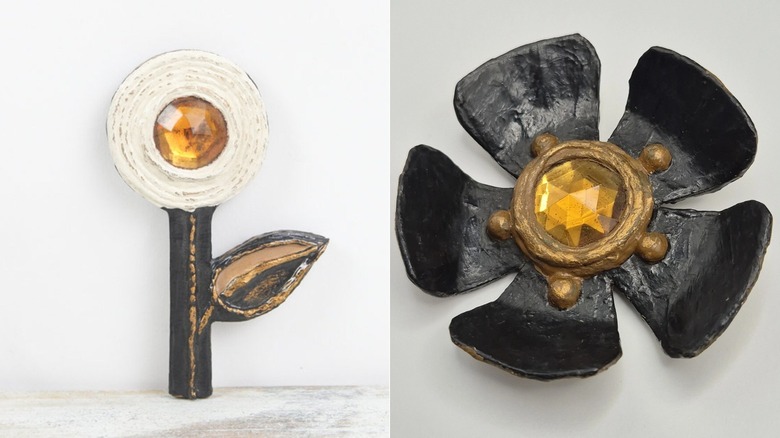
Today, paper jewelry might have you thinking of children's crafts and DIY art projects, but in the 1960s, it was an actual fashion trend. Designers were still keen on making jewelry from affordable materials and experimented with paper in surprisingly innovative ways. Two of the best-known designers to explore paper jewelry were Enid Collins and Wendy Ramshaw, and each took a very different approach.
In the 1960s, Collins made brooches and pins like the black Texas flower pin pictured above (via eBay) from papier mâché. Her jewelry gave off a handcrafted, artistic vibe that fit perfectly with the creative, expressive fashion of the era. Although papier mâché jewelry didn't make it into the late 2000s, Collins' pieces are highly collectible among vintage jewelry enthusiasts today.
Ramshaw, on the other hand, created self-assembly paper jewelry. She sold her jewelry as flat paper pieces with instructions guiding the wearer on how to assemble it themselves. It gave people the ability to take part in the creation process, which thrilled the 1960s crowd and made her quite famous. Today, paper jewelry is exceptionally rare, but if this trend were to make a comeback, it just might shake the fashion world up a bit.
Go-go jewelry was a big deal in the '60s
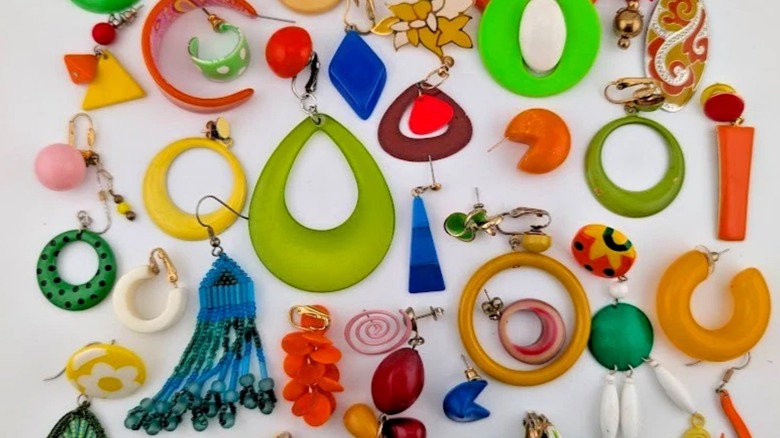
If you were a jewelry lover in the 1960s, there's a good chance you remember go-go jewelry, a bold trend inspired by the era's go-go dancing craze. Go-go dancing was super popular in the 1960s nightlife and had dancers performing energetically on platforms, stages, and even inside suspended cages.
Like the dance itself, go-go jewelry was vibrant, playful and full of movement. It wasn't defined by a single style, but the general vibe leaned towards the youth and energy you would expect from a go-go dancer. Think big dangling earrings and necklaces that jiggled with every movement, colorful and bold statement pieces made from plastic or other non-precious materials, and metal chokers designed to stand out.
The go-go trend is definitely no longer as popular as it was in the dance or jewelry scene, but because much of it had to do with personal expression, it's probably never going to go totally extinct. In fact, one might argue that go-go jewelry, as well as much of the 1960s jewelry aesthetic, is the inspiration behind the modern dopamine jewelry trend that has taken pops of color to the next level.
Pop and Op art jewelry were massive '60s trends
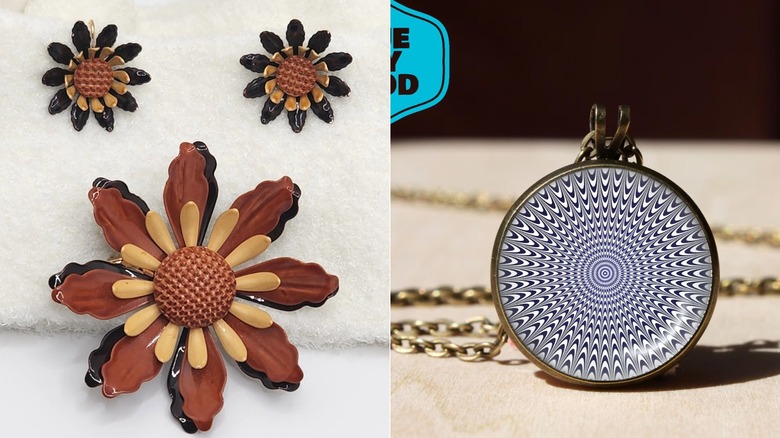
Two of the biggest art movements of the 1960s were Pop and Op Art, and it didn't take long for them to influence the jewelry world. Pop Art, as its name suggests, was inspired by popular culture and everyday life of the '60s. This led to playful jewelry featuring unconventional shapes, nature motifs, and everyday items made into wearable art.
Op Art, on the other hand, was short for optical art, and jewelry inspired by this art form featured visual illusions through geometric shapes, patterns, and bold color contrasts. The goal was to make designs appear to move, vibrate, or swirl, like the black-and-white hypnosis spiral pendant pictured above (via Etsy).
Although 1960s Pop and Op art jewelry naturally faded out of popularity, they've continued to influence designs decades later and are still collected by vintage enthusiasts. If you're considering dipping your toes into vintage jewelry from this era, consider committing to the full aesthetic with four hair trends from the '60s that you may have forgotten.