

Boomer Fashion Trends That Younger Generations Will Never Understand
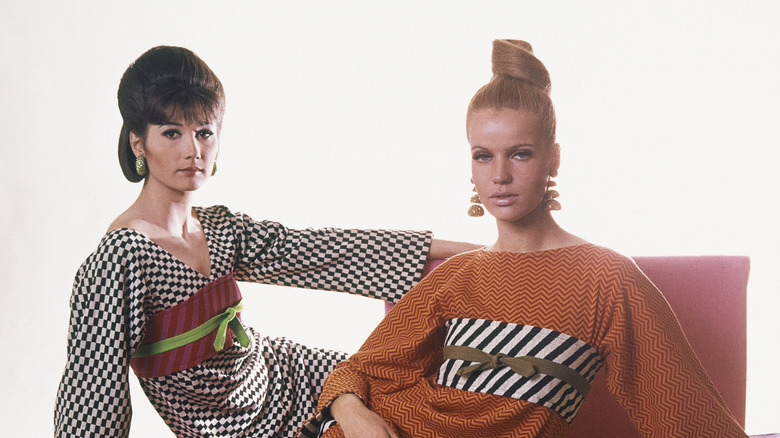
Baby boomers can't stand some of the younger generation's fashion fads, and the feeling is mutual: there are plenty of boomer-era trends that younger generations can't quite wrap their heads around. Born between 1946 and 1964, by the time boomers reached their teenage years, style trends had evolved into something far livelier than Old Hollywood glamour aesthetics.
As a youthquake took the Swinging Sixties by storm, fashion embraced a Mod subculture and trends were characterized by breaking barriers, bold haircuts, geometric patterns, and statement silhouettes. The newfound love for self-expression marked a turning point in fashion, paving the way for a new era of expressive styles. "The era was more about creative individuality, and [the current times have] set the stage for a fashion reset," Travis Hamilton, creative director and luxury brand founder, told The Zoe Report in 2024. In the '70s, fashion was defined by bohemian and disco party cultures. Fashion enthusiasts embraced the significant trends by wearing metallic materials, go-go boots, dramatic flares, and almost all hippie-style outfits were complete with fringe. By the '80s, hair had reached new heights, vibrant activewear and latex became popular, and denim dominated wardrobes.
Social media has since transformed how fashion trends spread, with younger generations becoming less focused on self-expression and more concerned with fitting a particular aesthetic. Of course, some iconic boomer fashion trends that have stood the test of time, but there are also some retro fads that younger people just can't seem to get on board with.
Gladiator sandals would ruin the younger generation's precious balletcore trend
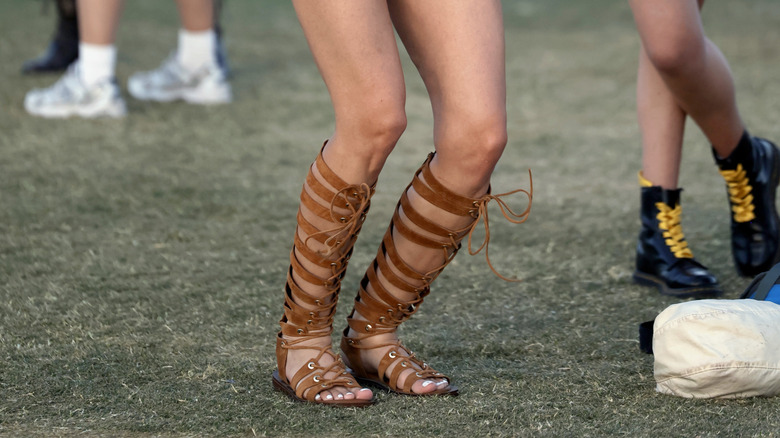
Gladiator sandals got their name from, you guessed it, gladiators. The historic shoe dates way back to ancient Rome, where they were worn by ancient arena fighters who needed foot protection and ankle support. The shoe resurfaced as a baby boomer fashion trend in the '70s, with the rise of the bohemian and hippie-style fashion trends. This statement shoe is hard to ignore, featuring several straps or laces that wind up the leg and hug the calf. Since boho trends were characterized by a newfound love for natural materials and earthy tones, it's no surprise one of the world's oldest shoes found its way back as a fashion fad.
Not only did gladiator sandals symbolize a rich history and a sense of authenticity, but the strappy shoes also nodded to the rebellious attitudes during the hippie movement. Gladiator sandals weren't limited to one style, with some silhouettes featuring heels or wedges and others adorned with embellishments or embroidery. Given this, practically everyone could find a style suited to their personal taste.
As younger generations continue to follow balletcore trends, it's safe to say they wouldn't understand the gladiator sandal hype. In fact, this strappy shoe is even listed as one of the outdated sandal trends we bid adieu to in summer 2023. The balletcore aesthetic is defined by minimalism and gives outfits a delicate finish. The dainty fad directly contrasts the ancient warrior-inspired attitude that the gladiator sandals symbolize.
Younger generations aren't ready to commit to the boomer colorful tights trend
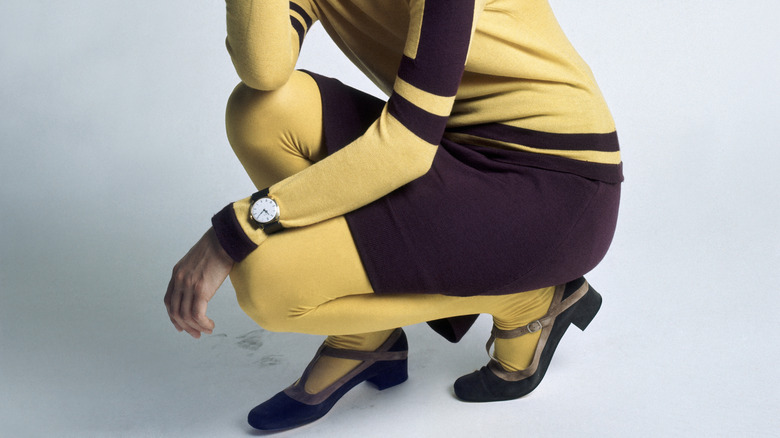
Baby boomers loved wearing colorful tights in the '60s. As mod trends turned fashion on its head, women's haircuts got shorter, prints got bolder, eye makeup got darker, and fashion enthusiasts longed for an androgynous appearance. Skirts also got much shorter, not just by a few inches, but hemlines rose so much that women had to stop wearing stockings and buy tights instead. As Vogue put it in a 1966 issue, "Legs are still it — that's the whole story. And what it boils down to is this: you're going to see a real variety of hemlines now, with nothing but good news for legs." Of course, during a decade characterized by vibrancy, tights weren't made to blend in. Instead, they became a focal point for many outfits. Mary Quant, a major designer of the era, even released a collection dedicated to bright pantyhose and stockings.
In 2025, colorful tights resurfaced — but only for a brief moment. Despite fashion outlets claiming the trend was bound to get bigger, it ended up dying out pretty soon after. What made monochrome tights so fabulous in the '60s was that they were paired with already-lively garments and elevated outfits. Rather than wearing the vibrant tights to elevate already-lively outfits, Gen Z has opted for darker hues and couldn't move away from their preference for delicate appearances. Younger generations may understand pops of color, but they have yet to fully commit to bold, in-your-face styles.
Acid wash jeans cannot blend with the era's clean girl aesthetic
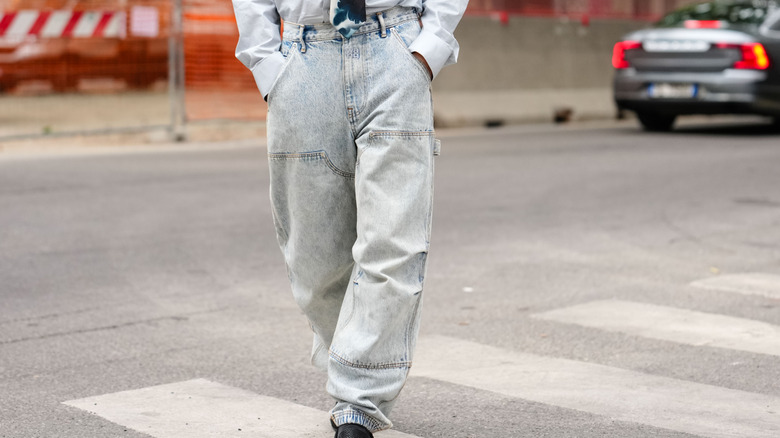
Nearly everyone had a pair of acid wash jeans in their wardrobe in the '80s. As a wave of technological development caused music to move away from disco genres and toward punk and MTV anthems, baby boomers went wild for distressed fashion. Enter acid wash denim. "The style of the '70s soon faded away into an era that was brighter, bolder, and more extreme," retro nostalgia fanatic and podcast host Jamie Logie said on the "Everything 80s" podcast in 2024 [2:15]. "Acid wash, along with distressed jeans with rips and tears, were soon worn by rockers, glam rockers, and big pop stars," he added [5:08].
Denim brands like Levi's and Guess, which even coined the term "acid wash," used a chemical to distress the denim material and create a retro, lived-in look. According to the Los Angeles Times, the style was so popular that by the end of the '80s, around 400 million pairs of jeans would have been sold. Of those 400 million pairs, 35% were acid wash, and 30% were stone wash. "From jeans to jackets, skirts to jumpsuits, acid wash was everywhere in the 1980s," Logie continued on his podcast [5:45].
Acid wash jeans are hard for most members of younger generations to wrap their heads around, especially during an era characterized by the clean-girl aesthetic and "pilates princess" trends. There are style trends of the '80s that are still cool in the 2020s. Unfortunately, distressed jeans are not one of them.
Gen Z couldn't handle ultra-tight, neon activewear
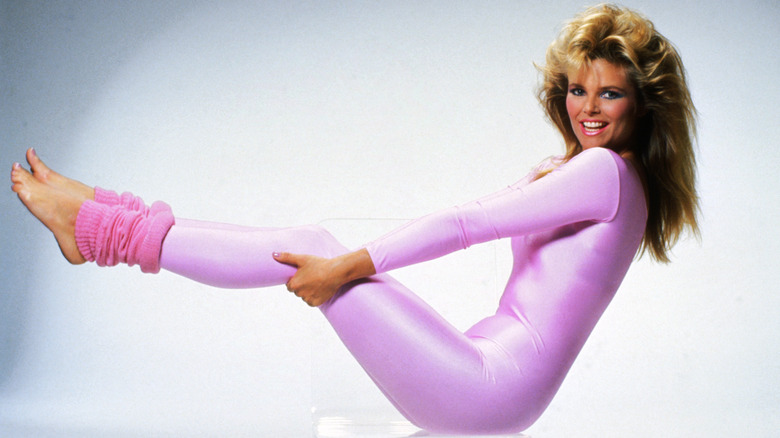
Almost everyone was following fitness videos in the '80s, and baby boomers loved to do so wearing neon activewear, shock. It's really no surprise, considering the era is widely remembered for its bold styles and a larger-than-life attitude. With a new fitness craze, consumers had an entirely new reason to take part in some retail therapy. Following their instructors' lead, fashion enthusiasts stocked up on vibrant leg warmers, leggings, and leotards. An increased focus on body-conscious silhouettes helped popularize ultra-tight activewear, and while it wasn't necessarily comfortable, women of all ages felt incredible. "Lycra became the second skin for a new life in which self-confidence would be rooted in women and their bodies, not in rules, dress codes, wearing clothes that were 'appropriate' for age or social status," anthropologist Kaori O'Connor told Rouge Mag in 2024.
It's true that since 2020, younger generations have adapted their day-to-day style to include activewear. However, their take on the trend has nothing on the ultra-tight, neon styles of the '80s. Instead, comfortable and oversized tracksuits and stretchy, made-for-comfort leggings have become the go-to for younger generations. It's not only extremely rare to find young people working out wearing neon leg warmers or leotards, but fitness brands like Tala have become popular for prioritizing women's comfort — a stark contrast to the fitness leotards of the '80s. Spoiled by comfort-first activewear, it's safe to say younger generations will never quite understand the ultra-tight, neon-clad glory days of at-home workouts.