

Rules The Royals Are Encouraged To Follow When Picking Out Baby Names
Even for the common folk, choosing a baby name can bring a lot of pressure. But in royal circles, the pressure is usually taken to the max, since there are lots of factors for expecting members of The Firm to navigate. Like all couples, they must find a way to balance their own preferences with those of their partner, which is no easy feat. As celebrities in the spotlight, they have the added responsibility of taking into account how the public will perceive the names they choose. And as a part of a centuries-old institution, they're expected to do that while also following certain baby-naming traditions, from choosing several monikers per baby, to honoring ancestors.
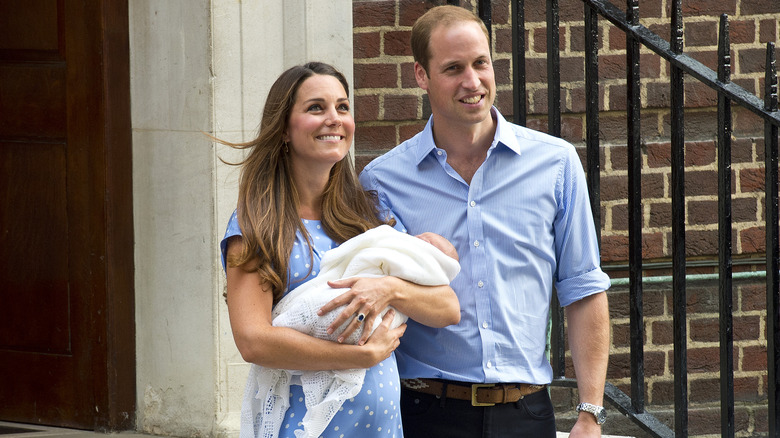
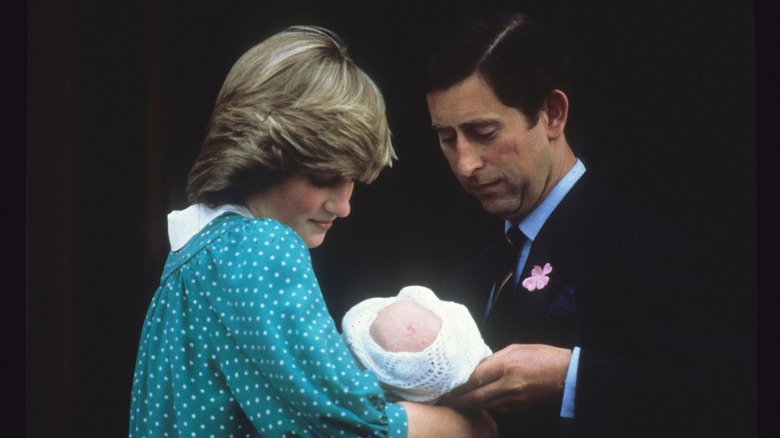
The strict rules placed upon members of the royal family have calmed down over the years, particularly when it comes to traditions surrounding babies. Originally, the public would have a long wait between the baby's arrival and the the announcement of their name. King Charles III had his name announced a month after his birth, while his son William, Prince of Wales, was announced when he was a week old. His son, Prince George of Wales, was announced two days after his birth. Similarly to this subtle shift that flows between generations, baby-naming protocols have softened into gentle guidelines rather than non-negotiable requirements, which is good news for modern members of the royal family.
The biggest change is the influence of the monarch, whose approval was once required before a royal couple could name their baby. Now, this direct approval is more of a casual blessing, and in some cases, that might not even be sought out at all. From the classic contenders of Charles and William to the more modern Zara and Mia, these traditions were often adhered to when these royals were named.
Multiple baby names are preferred for a reason
You might have noticed that royal names tend to go on for longer than non-royal names. Princess Diana famously got tongue-tied at the altar when she married then-Prince Charles, calling him "Philip Charles Arthur George" instead of his name, Charles Philip Arthur George. That's because it's tradition — though not strictly speaking an enforced rule — that royal babies are given multiple names, nodding to their prominent ancestors. And we see it in practice with most royal babies, even today.
Take the first child of William and Catherine, Prince and Princess of Wales: Prince George Alexander Louis. George has been frequently used in the history of the House of Windsor, either as a given name or a chosen regnal name. Notably, the late Queen Elizabeth II's father ruled as King George VI, though he was born Albert Frederick Arthur George. Meanwhile, Alexander (and its variants) is another name commonly used in royal circles; Queen Elizabeth's full name was Elizabeth Alexandra Mary. Then there's Louis, possibly a tribute to both Prince Louis Alexander of Battenberg — the grandfather of the late Prince Philip — and Earl Louis Mountbatten, the great-uncle of King Charles III. Louis also became the name of William and Catherine's third child, Prince Louis Arthur Charles, who was given names honoring his grandfather, King Charles III, and his father (William Arthur Philip Louis).
The royal family is usually reluctant to change tradition, but one shift has been a reduction in the long list of monikers given to babies. Both Charles and William have four names, but William's children each have three names — his daughter is Princess Charlotte Elizabeth Diana, which nods to the late monarch and also Charlotte's iconic grandmother Princess Diana.
The monarch's blessing may be sought out
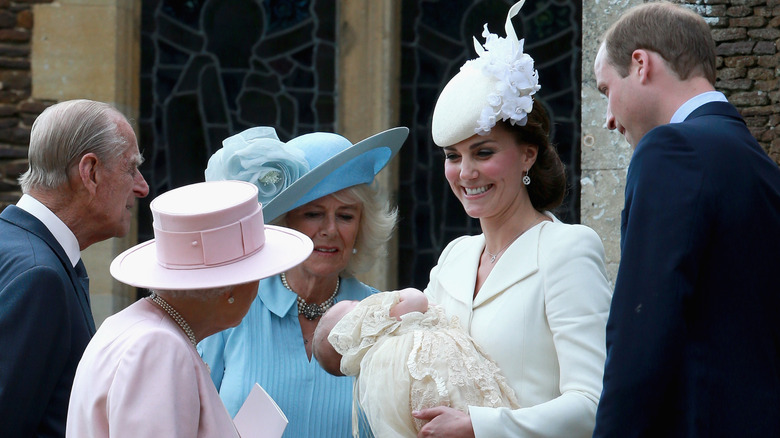
Gone are the days when sovereigns had absolute power. But being fans of tradition, the royal family still tends to talk through their choices with the monarch. In the reign of King Charles III, family members don't have to get his approval, but it's thought that they discuss names with him and perhaps seek a blessing, the way they did with Queen Elizabeth II. One of the most famous cases of this is with Princess Beatrice of York, whose parents originally were considering the name Annabel. Rather than giving a hard no, Elizabeth suggested Beatrice as an alternative, which made it through. While the monarch doesn't get the final say on baby names, it is up to their discretion what royal titles are bestowed on the little bundles of joy.
Once upon a time, the king or queen did have much more direct authority over every baby name in the family. When the Queen Elizabeth's sister, Princess Margaret, was born in 1930, her mother sought approval from her in-laws for the name Ann Margaret. Unfortunately, they declined her wishes, insisting on Margaret as a first name.
This tradition came into question more recently with the birth of Princess Lilibet, the daughter of the Duke and Duchess of Sussex. Lilibet was famously the private nickname of Elizabeth herself, and there was mixed reporting as to whether Prince Harry and Meghan Markle had received the queen's blessing for the use of the name. The Sussexes announced that the queen was happy for the name to be recycled, but palace staffers dispute this. Meghan Markle's baby-naming advice comes down to keeping the moniker under wraps until the baby is born, but whether this also applied to the late queen is a case of he said, she said.
Some names are vetoed from the start
The monarch no longer dictates what royal babies are allowed to be called in general, but there are still some names that are reportedly vetoed from the beginning. Even non-royal citizens are aware that some baby names will get them the side-eye, but this is magnified when you're living inside the gilded cage of royalty. In particular, royals are discouraged from choosing names associated with other royals — still living or otherwise — who have been disgraced.
In the 2020s, the best example of this would be the name Andrew. It's not quite a glamorous, Old Hollywood-inspired baby name, but several royals have had this moniker throughout history, including Prince Andrew of Greece, who was the father of the late Duke of Edinburgh, Prince Philip. However, given Andrew Mountbatten-Windsor's stripping of all royal titles, this name is widely believed to be a no-no for the royal family moving forward.
That said, the bad reputation that certain royal names carry may fade away over the years — or centuries. For example, King Charles is the third English king to have the moniker, which isn't exactly a unique royal family name with a deep meaning, even though he was entitled to choose a different name as monarch. Notably, Charles I didn't have the best run as king, trying to hold absolute power over his people which resulted in his eventual execution in 1649. But that bloody history didn't stop Queen Elizabeth II from naming her son Charles many years later, nor did it stop him from taking that name as sovereign. "There are no hard and fast rules these days, it is much more relaxed," royal expert Joe Little told BBC of the monarchy's revolutionized approach to baby naming.
Modern royals should take into account personal and public tastes
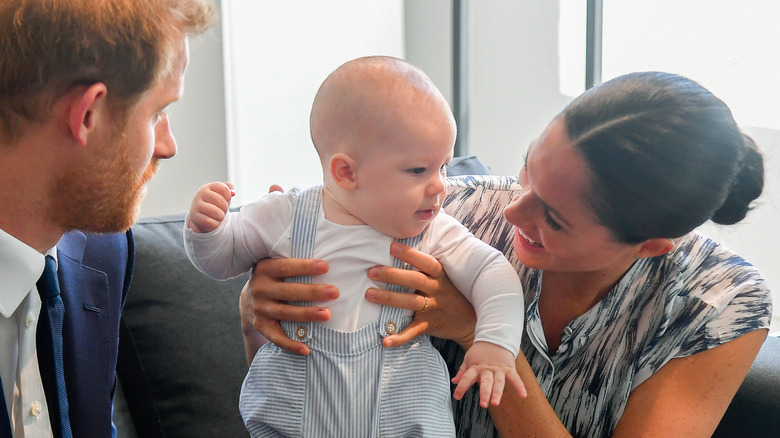
Ironically, one of the expectations placed on modern royals when it comes to baby names is that they'll still prioritize their own preferences, and balance these with public perception. While the Queen Mother had to ignore her own desire for the name Ann, royals these days are encouraged to honor those personal feelings. From a P.R. perspective, having this sense of individuality endears them to the modern public, which might not have been the case historically.
"When you choose a name for a royal baby there's the personal [preference]; there's the link with the royals past and present; but also you think about the public," royal commentator Richard Fitzwilliams told BBC in 2018, stressing that the personal taste of the parents is important, but it has to align with public attitudes. "You want a name that resonates, a name that's got family links and is popular," he went on. Non-royals might not have to worry about what's popular on the baby name front, but this is just one more way that members of the royal family can improve their public image.
Public relations specialist Christian Turner told Vogue Australia that there's more pressure for the House of Windsor to gain public approval these days, due to society's shifting values. "Royals have always been celebrities but they have not always been celebrities in an age of celebrity culture, with other things competing for attention and time," he said, adding that it sends the message that "they understand and exist in the world around them" when they choose an in-touch name, as opposed to one that feels stiff and overly aristocratic. Since royals are mostly referred to by their first names rather than their titles, their likability is more important than ever.
Naming protocol applies to children closer in line to the throne
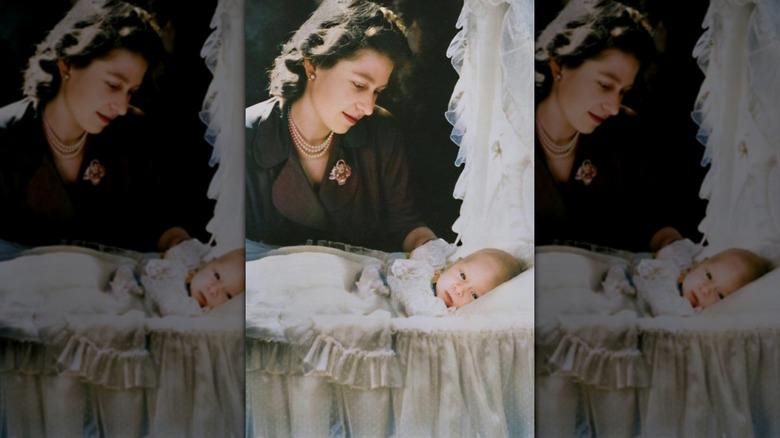
Whatever the royal naming tradition says, it's generally more likely to be adhered to with babies that are key players in the line of succession. "The further down the line of succession, the more likely you are to have a more unique or untraditional name," history professor Carolyn Harris confirmed for Vogue Australia. If we look at Princes William and Harry, the sons of current monarch, they were each given four names (William Arthur Philip Louis and Henry Charles Albert David). Compare that to Princess Anne's children, a few slots down the ladder: Zara Anne Elizabeth and Peter Mark Andrew. Sure, there's still a royal flavor to these names with multiple traditional monikers per child, but they each have three names as opposed to William and Harry's four. Plus, the name Zara is far less expected in a royal context, reportedly suggested by King Charles III.
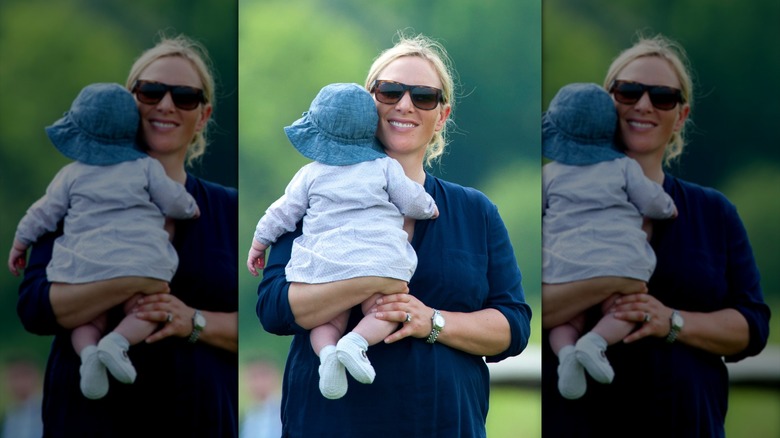
Or take William and Harry's own children, who each have three names, as opposed to the children of their cousin Zara. Zara's kids with husband Mike Tindall aren't grandchildren of the monarch, which impacts what titles they were given at birth. But beyond that, her children only have two given names each: Mia Grace, Lena Elizabeth, and Lucas Philip.
It was theorized prior to the birth of Prince Louis in 2018 that his name would reflect his mother's Middleton side, perhaps including Michael, after her father, or James, after her brother. The public seems to have fewer expectations of traditional royal baby names with each additional child that a couple has, even if these expectations are surpassed. In the end, Prince Louis' three names all ended up being quite traditional in the context of the royal family, rather than honoring his non-royal maternal family.