

Old-School Fashion Trends From The '30s & Beyond That Have Become Popular Again
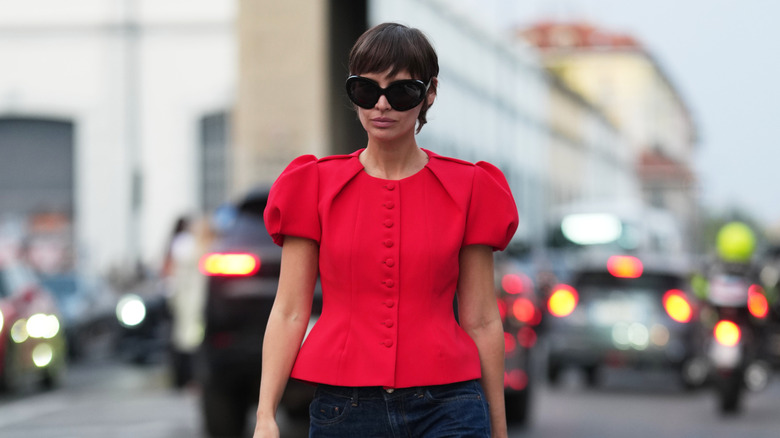
It's been nearly a century since we bid farewell to the 1930s, and yet fashion today is not all that different. A decade of economic hardship and international tension, the '30s also had some positive aspects that influenced the clothing designs of the era, from the rising popularity of the neoclassical aesthetic to the birth of the Golden Age of Hollywood cinema. The bias cut was the dress style du jour, surreal graphics took over garment design, and figures like Coco Chanel, Jeanne Lanvin, and Elsa Schiaparelli worked their magic. There was a certain artistry that shaped the top trends of the decade, lending a natural elegance to the ideal wardrobe, and some of that has survived to the modern era through clothing aesthetics that are still flying off the shelves.
Contrary to what one might assume, the 1930s wasn't an overly conservative decade where having fun with fashion was banned — although glamour was out of reach for many navigating the aftermath of the Great Depression and the incoming Second World War. They may have been limited to models and movie stars, but backless dresses, halter tops, and satin all dominated the fashion of the day. 90 years later, we're still making space for trends like these in our rotations, albeit in different ways. Just as there are old-school baby girl names from the '30s and beyond making comebacks in the 2020s, these styles are still as cool today as they were in the bygone era.
Puff sleeve dresses are still popular in 2026
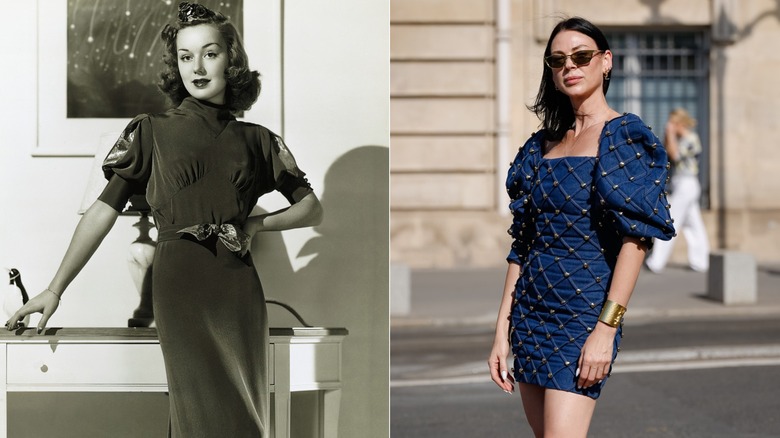
Puff sleeves were a mainstay of 1930s fashion — a feminine detail that tied in seamlessly with the dress styles of the time. Nine decades later, we're still obsessed with puffy sleeves, which made sundresses even chicer a few years ago in 2023. A volumized sleeve can come in endless different forms, though fashion in the 2020s tends to be more exaggerated and edgy than the old-world aesthetic of the '30s. While puffy sleeves were mainly associated with dresses back in the day, today they're also popular on blouses and other tops.
Women in the 1930s rocked wide-leg pants
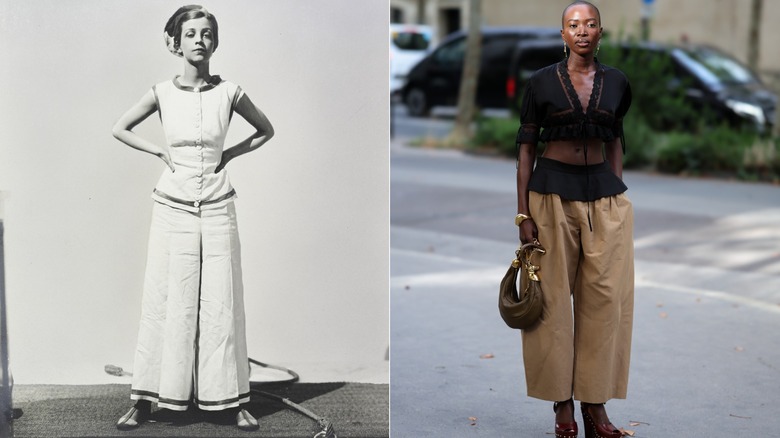
Modern audiences might underestimate how androgynous women's fashion could be in the pre-war era. Wide-leg pants were huge in the '30s, often worn as part of a set for a cohesive look. The 2010s might have been all about the skinny jean silhouette, but we're firmly back to baggier styles in the 2020s, including wide-leg pants and jeans. The key to nailing this look in any period is balance; opt for a form-fitting top or a cinched waist to avoid swimming in fabric.
It's always a good time for androgynous suits
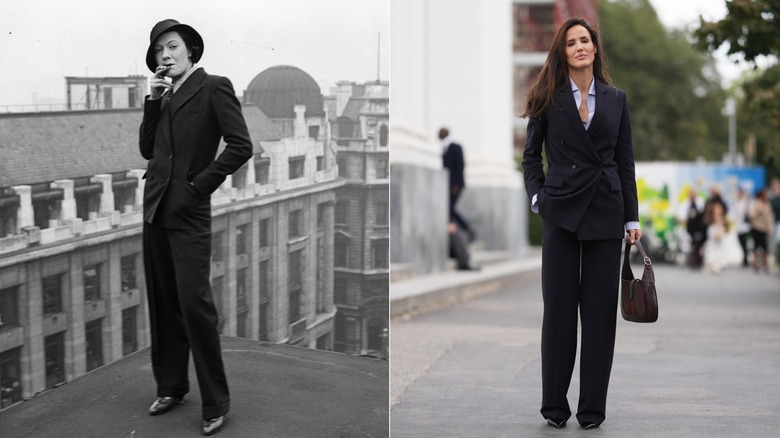
Although it wasn't until 1939 that the Second World War birthed a new utility-oriented fashion ethos, androgynous suits were still a staple of the 1930s. These tended to be more tailored than the oversized versions we favor today, but they still broke away from the standard feminine aesthetic that dominated the rest of the fashion world at the time. Styling this look in the modern era comes with a little more versatility; if you don't want to commit to the full suit, you can pair a blazer with jeans or a relaxed knit with slacks.
Halter-neck styles weren't just a Y2K look
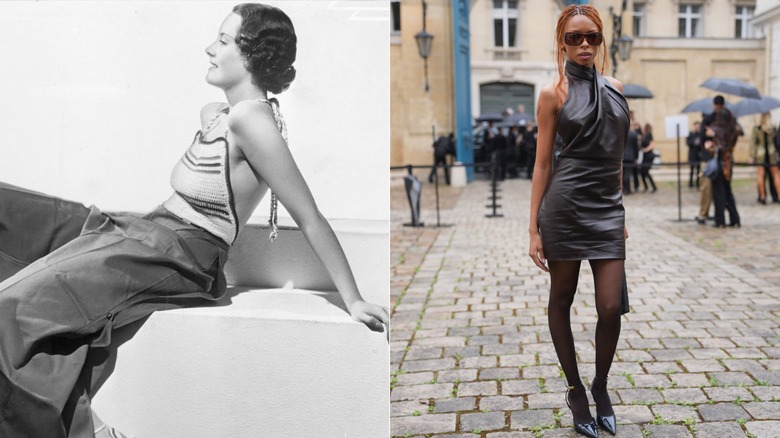
When you think of halter-neck silhouettes, your mind may jump straight to a noughties beach party, or the best Y2K outfits that Paris Hilton rocked in the 2000s. The last era you probably imagine the halter prospering in is the 1930s, but woven halter-neck tops were indeed a summer trend. To be sure, halters are a beach staple no matter which decade you're in, but now they also work in dress or top form as a street-style outfit base in the warmer weather. They look good with everything from jeans and skirts to more cohesive sets.
Shoulder pads continue to pop up over generations
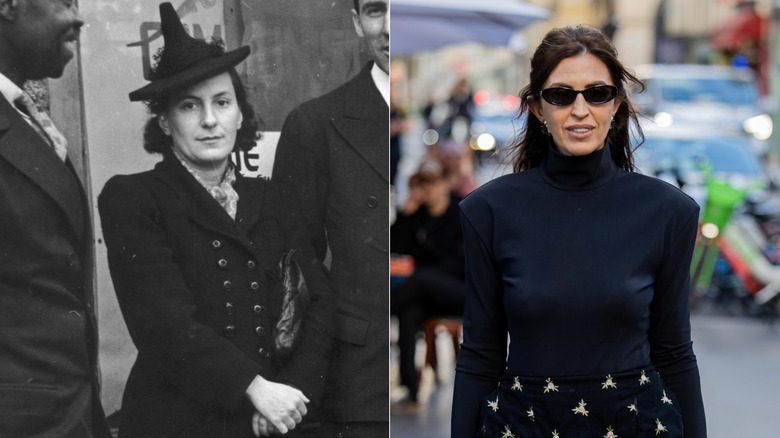
Shoulder pads are most commonly associated with the '80s, but they were also shaping fashion trends in the '30s and beyond. As is the case today, shoulder pads were featured in blazers and jackets in a more subtle way than the brazen version that was popular in the '80s, and they also didn't have quite as much volume or height. This is another trend that will never truly be dead and buried, and in the 2020s, we're seeing shoulder volume with more casual pieces, like T-shirts. Just one more retro trend that isn't outdated in 2026!
Defined waists were a hallmark of the 1930s
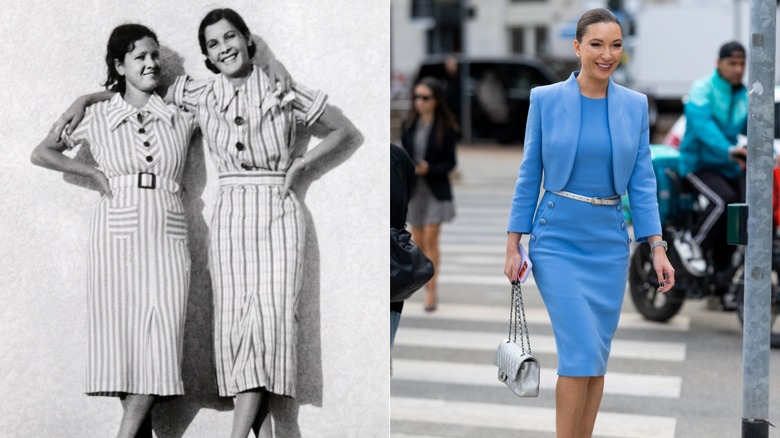
Along with bias-cut lines, one of the most popular dress shapes of the 1930s was the defined waist. People in the '30s relied on dress tailoring and belts to highlight, rather than cinch, their waistlines. This could either be done with a belt cutting a longer dress at the waist, or an outfit made of two pieces that came together at the waist. The 2020s so far have favored oversized silhouettes, but a defined waistline is coming back to the fore.
Backless dresses are the perfect way to channel 1930s glamour
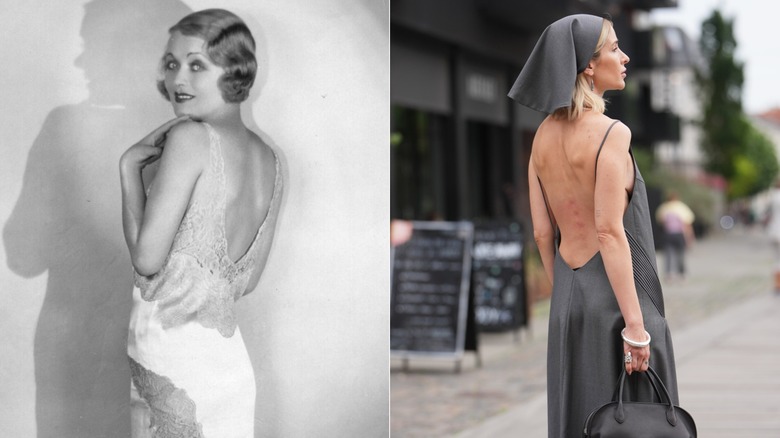
Backless dresses were one of the most glamorous trends straight out of Hollywood, even if they didn't quite reach the backside lengths that they can these days. This style of dress is trending again as we move into the second half of the 2020s, appearing on both casual and formal pieces alike. For maximum impact, opt for a backless dress with a higher neckline and more coverage at the front, which will create jaw-dropping contrast the moment you turn around.
You can evoke a 1930s vibe with a good bolero jacket
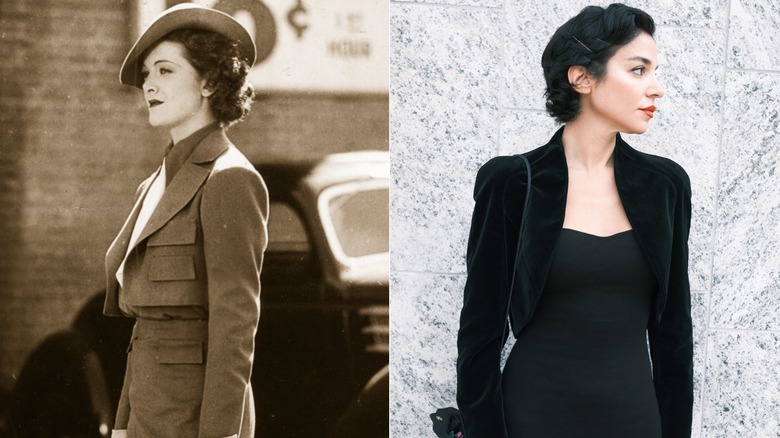
Cropped jackets are a good tool to have in your arsenal when defining the waist, which may be why they were so popular in the 1930s. The bolero, which tends to be an open jacket that falls just below the bust, would complement decade staples such as pencil skirts and wide-leg trousers. Surprisingly, this style of jacket is back at the top of the hot list, though this time we're having much more fun with it. A subdued neutral bolero works, but so does a colorful one with loads of volume worn over a formal dress.
Fluttery butterfly sleeves are both feminine and retro
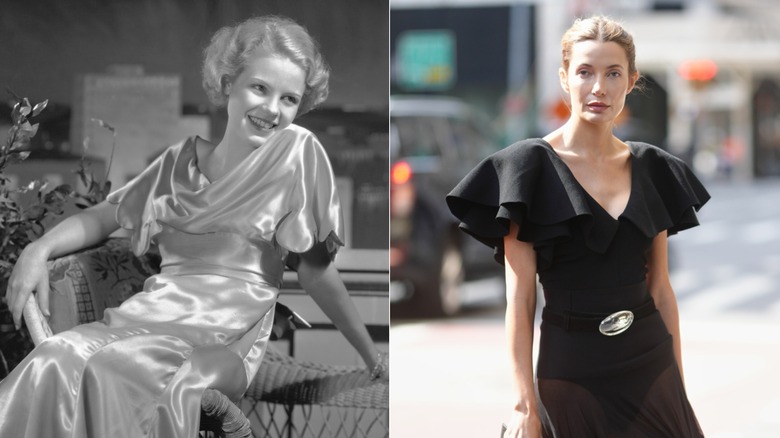
For those in the 1930s who felt the puff sleeve was a little too stiff, there was a more romantic alternative. Butterfly sleeves were another feminine element that gave dresses in the decade a unique sense of character, even if the same sleeve style is trending again today. This shape is cooling in the summer, adding a fun detail to a casual dress, but it also works on more formal and elegant garments. Butterfly sleeves with more volume and structure (and perhaps a little tulle) take a look from fluttery to high-fashion.
Satin dresses ooze vintage charm
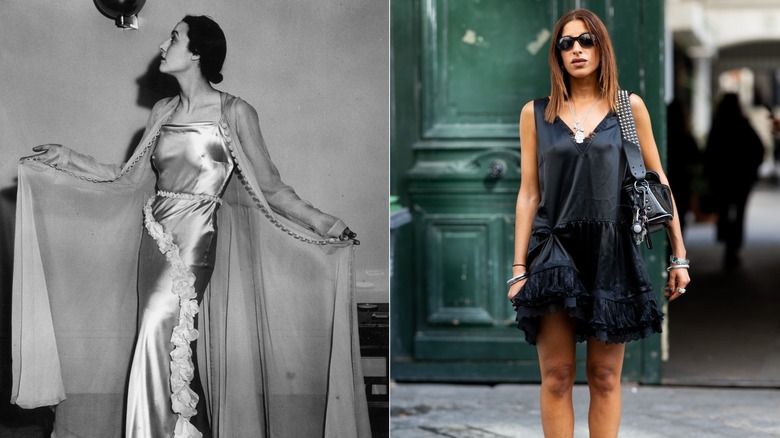
Among more opulent fabrics like silk and velvet, satin was one of the go-to dress materials in the 1930s. It helped an otherwise plain dress to maintain an aura of glamour, and in the modern era, we're still here for satin. These days, we reach for satin dresses and tops with lace detail, which can feel like sexy sleepwear — but that's exactly the point. Pairing them with less sultry fabrics, like denim or cotton, creates a dynamic and fashion-forward street-style look. Otherwise, a simple satin minidress with no frills or contrasts will always tick the box.