

Millennials Loved Tattoos - Now They're Making Laser Removal The Next Big Trend
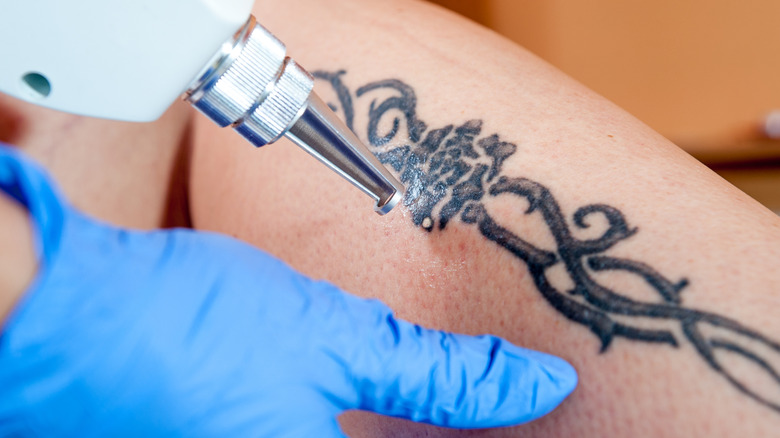
Getting a tattoo can mean sitting through hours of needles scratching against your skin. Getting one removed, however, is a different ordeal, and the question of whether a tattoo removal really hurts more than getting a tattoo isn't one with a straight answer. People who have undergone laser tattoo removal describe the sensation as being repeatedly snapped with a hot rubber band, splashed with hot grease, or burned by something electrical. But despite the agony over repeated sessions — most tattoo removals require multiple treatments — millennials across the world are getting in line in increasing numbers.
In 2025, Removery, a tattoo removal company, published an analysis that included interesting findings about millennials and tattoo removal. It found that this generation made up a significant section of the people hopping aboard the tattoo removal wagon between 2019 and 2024. Of those who decided to get tattoos removed, 38% were in their 30s, and 29% were in their 20s (via PR Newswire). This trend goes beyond regular folk, too. Even in Hollywood, many millennial celebs fall into this category. Khloé Kardashian, Pete Davidson, Zoë Kravitz, Kelly Osbourne, Sarah Hyland, Iggy Azalea, and Megan Fox are only a few famous millennials who've gone under the laser to erase their ink. The question is, why, and what is driving this change?
Millennials initially thought their trend-driven tattoos made them unique

Tattoos were originally a way to be different. They signaled a rejection of the notion that our bodies had to look a certain way and gave people the freedom to treat their skin as art. Millennials loved the idea. In 2017, a survey from YPulse showed that the most common tattoos among millennials were quotes, names/initials, stars, crosses/crucifixes, and heart(s).
Some other common designs were big, bold, and colorful tats. We're talking lower-back "tramp stamps," tats inspired by favorite franchises (Disney and Harry Potter tattoos, anyone?), and commemorative ink. Pieces for loved ones, matching tattoos, and portraits of people were also common. Patchwork tats were another huge trend. Why get one big tattoo when you can get fifty smaller ones that "work together"?
However, one interesting finding from the YPulse survey was that, despite the striking similarities in their tattoo choices, 89% of respondents believed their tattoos made them "unique." In fact, 82% said they would never get a tattoo removed. Yet now, years later, millennials are part of the largest age group getting laser removal. One of the most common reasons for removal is regret for impulsive tats, as the TikTok tattoo regret trend highlighted. Others include changes in tastes, realizing that a tattoo is now outdated, breakups with friends, partners, or family, changes in views, and employment. In other words, many people find that they've outgrown their tattoos.
Tattoo location and artist picks are also reasons for laser removal

Not everyone signing up for laser removal is doing so because they've changed their minds about their tattoo. Some have to part ways with their art because it was poorly done in the first place. This could be because the piece was inked on an area of the body where tattoos age particularly poorly, or because it was done by someone who didn't pay close attention to what the customer really wanted. The latter is a common reason tattoo artist Rosa Bluestone, a hand-poked tattoo artist, sees people signing up for laser removal.
"A lot of my clients come to me and say they wish they had found me before they had gotten tattooed elsewhere where they were pressured to go bigger and get something they didn't feel comfortable saying no to," she tells Glam. Bluestone believes that this is partly due to the fact that men once dominated the tattoo industry.
On one hand, we should appreciate the fact that choosing to get a tattoo is as autonomous as getting one lasered off, but it's also important to admit that avoiding tattoo regret should be a major priority when getting tatted. If you're considering getting a tattoo, it's better to have some hard boundaries in place to avoid eventually needing to go under the laser. Don't get tattoos just because they're trendy, and take as much time as possible to mull over your decision when getting a huge piece that cannot be covered (Removery noted that 46% of tattoos removed were in hard-to-cover areas). Additionally, hold off on people-centered tats or, at the very least, make them tiny, and do your diligence in selecting a skilled and attentive artist.