

The Gray Hair Trend That Adds Depth To Your Transitioning Look
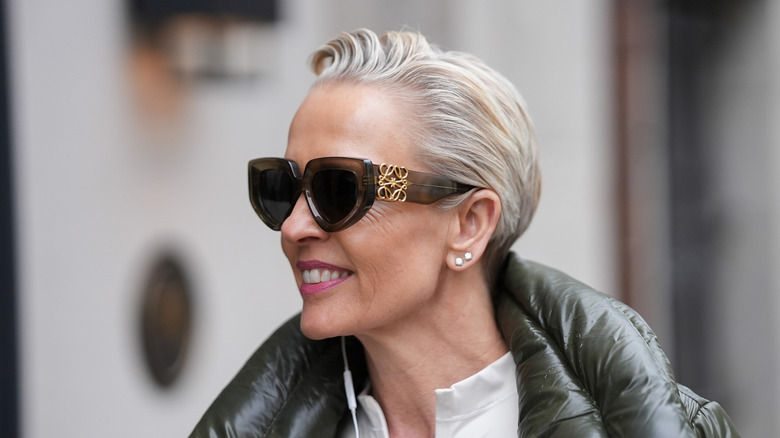
The transition to gray has the potential to completely elevate your style game, but it can also be a struggle. Like growing out bangs or a bob, there might be awkward moments as your hair changes from one look to another. But there's a foolproof and easy-to-implement way to ensure a smooth shift from your old color to your new gray. According to Jewell Hingorani, professional hairstylist and founder of Jewell Clip, it's all about moving from cool to warm with highlights or lowlights.
"Gray hair is naturally cool, but during the transition you usually have a mix of pigmented hair, gray strands, and sometimes previously colored hair," Hingorani explains in an exclusive chat with Glam. "If everything is toned too cool, the overall color can start to look flat or even make the complexion appear washed out." The answer? Bringing some contrast into the picture with softly-lightened and darkened strands to make your changing color look deliberate rather than out of control. Essentially, the goal is to seamlessly transform your hair with gray blending. The beauty of this trend is that you have a whole range of highlight and lowlight colors to choose from, as long as you stick with warmer shades. As Hingorani points out, "Warm tones also reflect more light, making the hair appear shinier and healthier."
Many celebrities who proudly show off their gray hair are great examples of this. Sarah Jessica Parker is a master of marrying warm, golden highlights with her silver tresses to create a chic transitional look. "Growing out gray doesn't have to mean looking unfinished," our expert reiterates. "With the right placement of highlights and lowlights, you can create a beautiful, dimensional color that evolves gracefully over time."
Soft shades of highlights and lowlights in warm tones look the best with gray hair
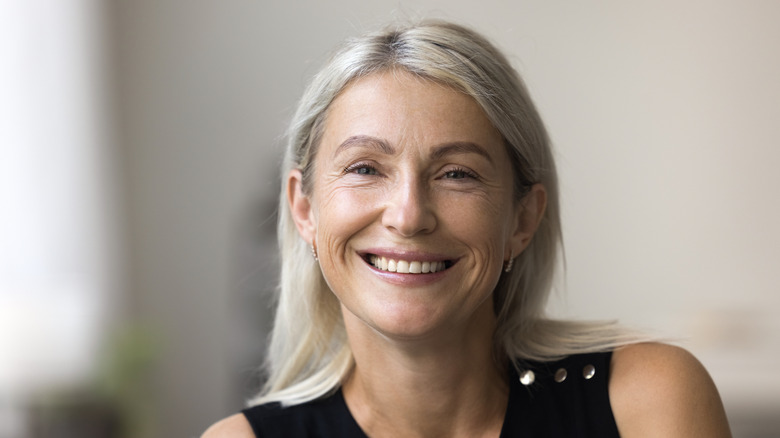
If you're new to highlights and lowlights, the first step is understanding the difference between them. Highlights are lighter than your base color, lifting the hair, while lowlights are darker and provide contrast and depth. Adding warmth to your gray hair through either of these (or maybe both, but more on that later!) is the perfect strategy because, in terms of color choices, the world is your oyster. As long as you keep it warm and preferably soft, there's no limit, and the only obstacle is decision paralysis.
As Jewell Hingorani notes, a good starting point is basing your highlights or lowlights on your pre-gray natural shade. "If you were naturally blond, I love soft shades like champagne blond, beige blond, honey blond, golden blond, or buttery blond," she tells us exclusively. Buttercream blond hair in particular is a warm alternative to platinum that works beautifully when blended into a multi-tonal gray look. "These add warmth without overpowering the gray and create a beautiful, blended grow-out."
When choosing your shade of lowlights, you can apply the same approach. "If you were naturally brunette, caramel, toffee, warm mocha, golden brown, light chestnut, and soft cinnamon are all gorgeous options," Hingorani says. There are a few reasons why these tones pair so perfectly with transitioning silver strands. The pro hairstylist shares that they'll keep your hair looking vibrant and alive rather than flat. Incorporating darker pieces can also help the gray to blend in a more intentional way, rather than looking sporadic against your base color. "You want the gray to become part of the overall color story, not something you're constantly trying to hide," she stresses. "Embrace the process."
How to prepare your hair for a gray transition
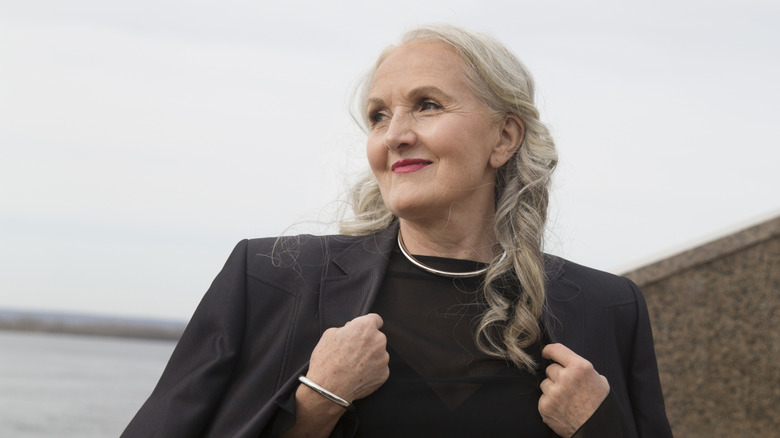
Everyone's transition to gray hair is unique, so figuring out whether highlights or lowlights work better for you might come down to trial and error. But Jewell Hingorani points out that you don't have to choose between them, since incorporating both is a strategy in itself — and often an effective one. "One of the biggest mistakes I see is trying to make the hair one solid color," she confirms in our exclusive chat. "Dimension is what makes hair look youthful. A combination of highlights and lowlights creates movement and gives the illusion of fuller, healthier hair." The beauty of light and dark strands interwoven together with gray hair is one of the reasons why many women are opting for herringbone highlights.
While you might have to experiment with how you want to color your hair, Hingorani has a few tips to prep your strands for future coloring and keep them looking flawless in the meantime. Firstly, since gray hair can look dull and feel coarse and dry, it's important to implement a solid haircare regimen. Hingorani recommends moisturizing shampoos, conditioners, and masks for added hydration. She also suggests using gloss to refine the tone and maintain shine, applying it every six to eight weeks.
Around the time many women start to go gray, they might also experience thinning. Your hair may be thinning around the temples as you get older due to androgenetic alopecia or hormonal changes that come with age. "If your gray is becoming finer or you're noticing thinning around the hairline or part, adding volume through the haircut or using a lightweight hairline topper from Jewell Clip extensions can make a dramatic difference while you transition," Hingorani advises.