

Boomer Hair Trends That Aren't As Popular With Younger Generations

At the risk of furthering the great divide between boomers and their younger counterparts, we can't help but notice that beauty trends tend to differ greatly across age groups. Boomers, who were born between 1946 and 1964, were the first to witness the rising popularity of some iconic vintage hairstyles, many of which have stuck with them ever since. Younger generations, born from 1981 onwards, haven't always embraced these 'dos with enthusiasm. That's not to say that anyone's style is better or worse, but ideas of what's hot don't always translate across generations.
In every era, there are inevitably those outside the mainstream who take to vintage trends like ducks to water. Just look at the community surrounding the mullet! Every dated hairstyle has a fan base, but with many boomer-approved looks, those tend to be in the minority. In general, generations X and Y have largely rejected some of the most popular looks from the '60s, '70s, '80s, and '90s, which are eras that many boomers remember fondly.
It's not hard to understand why boomers keep wearing hairstyles that younger folks have put on the "no" list. We're all creatures of habit, and in 40 years, millennials will probably be criticized by younger generations for clinging to their ombré ends and side bangs, too. Meanwhile, Gen Z will probably never part with their high ponys and cowboy copper hair, which dominated trends in fall 2023, even when their kids and grandkids call them old-fashioned. In the same way, boomers haven't been able to give up their wedge cuts and feathery bixies, which, to be fair, were among the most iconic hairstyles of the '90s. So while we might not always see eye to eye when it comes to hair, we can't blame them for sticking with what they know.
The beehive is iconic, but no longer the style du jour
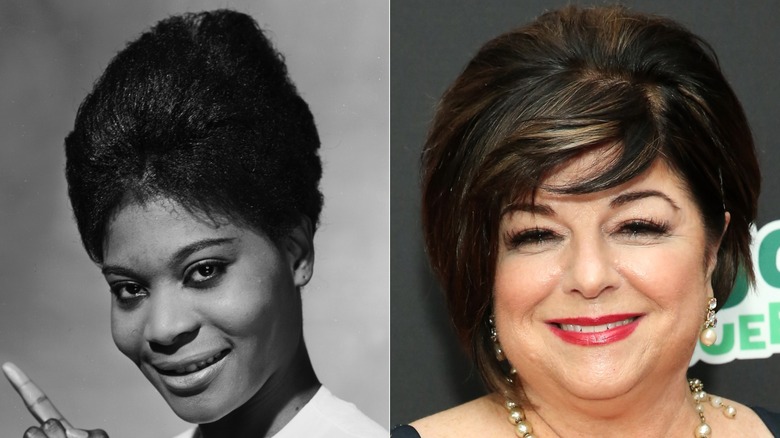
When we think of 1960s beauty trends, one particularly large hairstyle comes to mind: the beehive. Characterized by the hair being teased into a conical shape and held with hairspray, this updo had a huge moment in the swinging '60s, when many boomers were in their teens and early adult years. In one 1960s nostalgia group on Facebook, members shared their memories of this iconic style back in the day. "A full can of hair spray was always needed," one user recalled. The vintage look certainly popped up again on the pop cultural scene, most notably with Y2K singer Amy Winehouse. But even if older folks have continued to wear it, this isn't a look that the young 'uns have embraced en masse. While the Facebook group largely has fond memories of the style, it seems that Generations Y and Z are less impressed.
"Sorry, but were those actually real?" one Redditor, clearly too young to have witnessed the beehive era in person, asked in disbelief. The volumized look also made it into another thread nominating the worst hairstyles of all time.
Of course, nothing in the fashion and beauty world ever completely dies; if it doesn't cycle back into popularity, it lives on quietly with outliers. Vintage looks are also often "born again" with more palatable features for younger generations. Modern reiterations of the beehive generally have far less volume than the 1960s original, but they're right there. Used mainly for formal events and special occasions rather than for everyday (they were so popular in the '60s that girls wore them to school), contemporary beehives have more of a natural feel instead of the impossibly stiff vibe. There's more texture, body, and movement rather than something that looks like a fire hazard.
Some younger folks like mullets, but modern iterations only
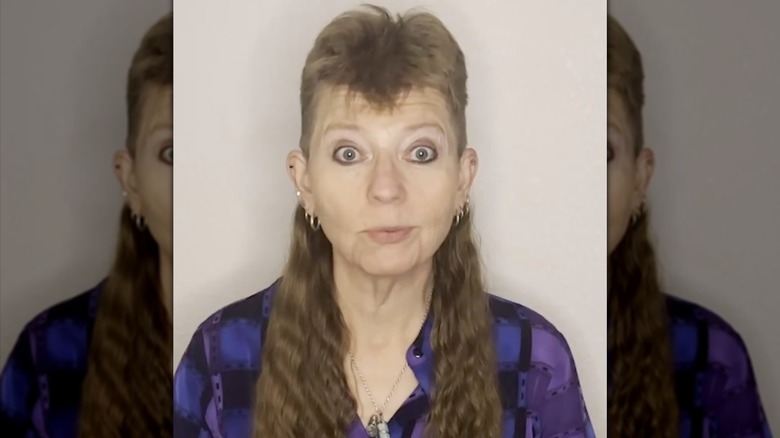
You'd be hard-pressed to find a more polarizing hairstyle than the mullet. There will always be a mullet-loving subset of the population, no matter the generation, but this bold, distinct style hasn't been en vogue for women since it was known as a bi-level in the 1980s, at least in its original form. The mullet, which features super-short layers at the top of the head and sides of the face, with longer hair at the back, was huge in the mid-1980s, when boomers were in their 20s and 30s.
"I was 11 or 12 in the late '60s," one Redditor recalled. "I had a '70s shag and a bi-level mullet in the '80s." Even though this look is no longer dominating pop culture like it once did, some in the bi-level generation still rock it. "I work with someone who still has this hairstyle in her 50s," another Reddit user noted. The mainstream, however, doesn't get the appeal, with Spanish publication Ara calling it the "world's ugliest hairstyle."
Interestingly, the mullet has crept back to the fore in the 2020s for men only. Still, many millennial and Gen Z women don't seem to be fans of the look. "A mullet makes men more attractive??" one Reddit user commented in shock. "F— did I miss a major style change?" Another took to the platform to lament the fact that her hairdresser had given her a mullet cut without her permission: "Cried my eyeballs out two times today and every time I look in the mirror I feel like crying again." The younger people who embrace this look today tend to go for a modernized version, with less severity and more blending.
Younger generations still love Princess Diana, but not her hair
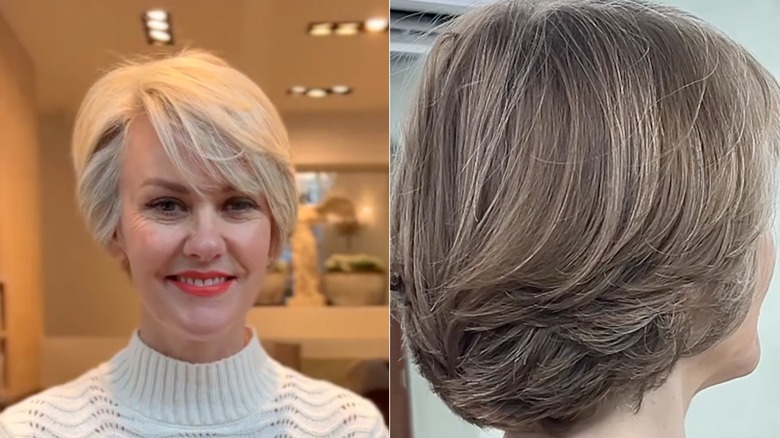
The enduring popularity of Princess Diana transcends time and space, and her iconic look is still influencing fashion trends today. But that effect is mainly limited to her makeup and wardrobe; when it comes to her hair, the modern world is slightly less enamored. The late princess had several hairstyles during her life, but one of the most iconic is the feathered bixie crop she had around 1990, when boomers were in their mid-20s to mid-40s.
At the time, people loved it, just as they loved everything she wore. Celebrities like Natasha Richardson followed suit in the '90s, as did many other women at the time. "She really did inspire a whole generation of '90s moms," a Reddit user noted, adding that their mother had the Diana cut. It's certainly considered a classic and is immediately associated with the royal icon, but there's a reason why you don't see generations Y and Z recreating it today.
"It's an admittedly dated hairstyle that only older women wear now," one Redditor weighed in. "It just has so many layers." Another commented, "It's grandma hair for sure." There's the odd hairstylist who will post a Diana-inspired bixie on Instagram, but generally, most of the content that comes up with a "Princess Diana hair" search on social media features the princess herself. Some outlets have touted the return of Diana's hair, but modern versions are much sleeker and less feathery, so comparing them to the royal's mane is a stretch. Contemporary bixies worn by younger folks usually have much more texture and structured styling, whether they're straight, curly, or wavy. Some older women still rock the look today; such is their love for the princess, and we have to admire that.
The wedge cut has some unfortunate associations
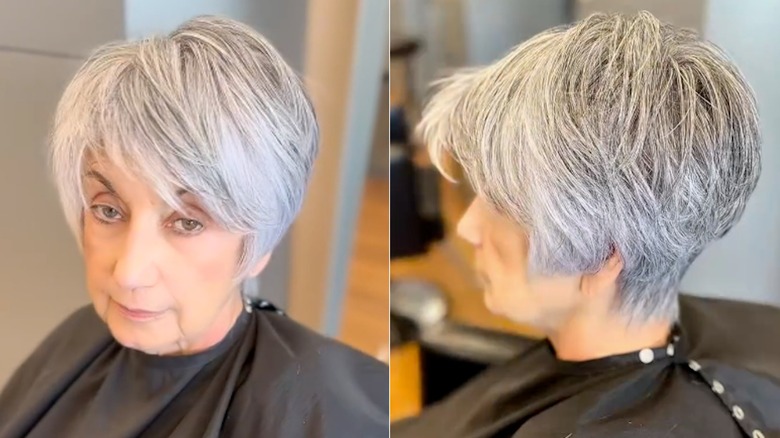
The popularity of hair trends doesn't just come down to aesthetics. Sometimes, hair becomes interwoven with culture in a way that forever affects how people relate to it. Enter the wedge cut, made popular in the mid-1970s by Dorothy Hamill. The voluminous bob features layers and an undercut at the nape of the neck, and as it's transformed over the years, younger generations have come to know it by a different name. Unfortunately, the wedge has become fused with the Karen.
"It seems like 1974's coolest women wouldn't mind speaking to the manager," one Redditor quipped about this throwback look, which has traditionally been associated with boomers. Its popularity with middle-aged to older women who may or may not have tons of complaints to the manager has overshadowed the aesthetics, at least in the eyes of generations Y and Z. It's a shame, because this cut is a good one for building volume and the illusion of density in fine hair.
Despite the negative connotations, this angled bob is still a go-to for boomers, some of whom tried to pass it on to their reluctant daughters. Few boomers wear their wedge exactly like Dorothy Hamill, but still look like the hairdo came directly from the 1970s, when it was all the rage. In its essence, Hamill's version was more of a bowl cut, and over the years, the look has adapted to feature more texture and stacking, which are the details attributed to the "Karen" hairstyles. These days, younger people might go for a wedge if it has more contemporary elements, like tousling, waving, or a slightly longer length — people are increasingly embracing lob haircuts for that perfect in-between length. But the sleek, stacked, distinctly angled version of the look is pretty much on every millennial's "never" list.
Perms are no longer a beauty industry must
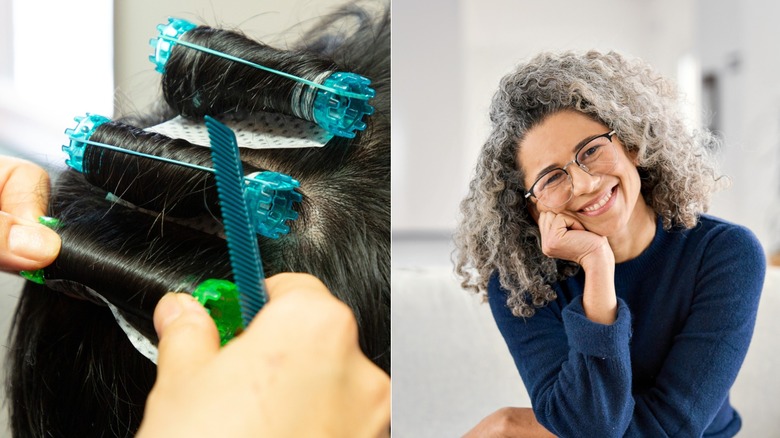
Chemical hair treatments are still commonplace in the beauty industry, but there's one kind we don't see nearly as often as we did before. The perm still exists, but only just. This look, which features the hair being wrapped in rollers and chemically enhanced to hold that pattern for months, has largely fallen out of favor. "I think people are reminded of the '80s when they hear perm," one Reddit user theorized. Indeed, the perm, short for "permanent hairstyle," was a staple in this decade. It also made waves in the '70s and '90s, but its popularity didn't survive into the new millennium.
"Perms used to be required in beauty school, but they aren't anymore," another Redditor explained. "A lot of people graduate from beauty school having done one or two, at most, often none. Then they do maybe half a dozen a year and those are mostly on older women." For younger folks who do want to try the technique, there are still stylists who offer it, but you generally have to search high and low to find them.
Like any other vintage style, the perm has only been able to survive with modern updates. Contemporary versions in the 2020s generally feature more variety in their wave pattern and positioning, with many only perming certain areas of the hair. In 2023, we saw the "faux perm" trend taking hair volume to the next level. Aside from aesthetics, one of the reasons why perms aren't a go-to with younger women could be due to the rise in general health consciousness, since the chemicals used in the process can be harmful to the scalp. They also alter the structure of the hair, rendering it more prone to damage.